By Donna Richardson
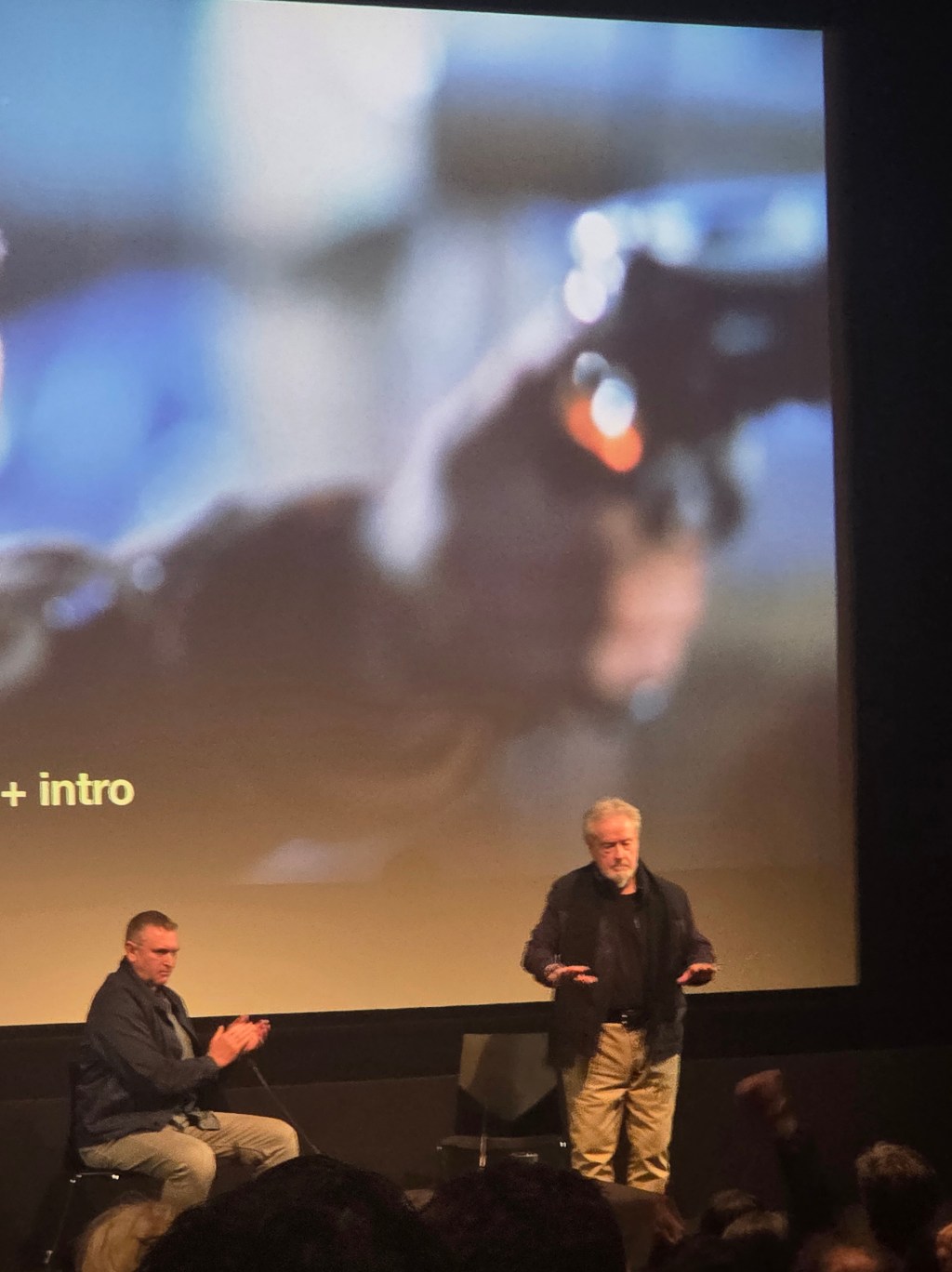
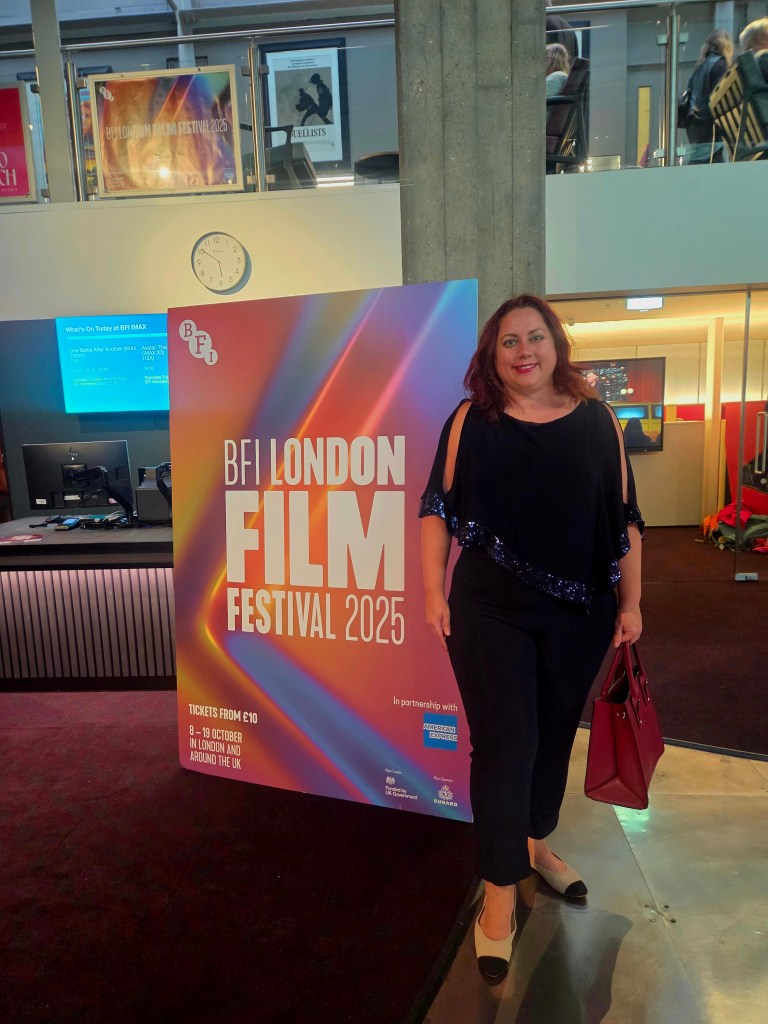
The Direcots cut of a 1982 cult classic original Blade Runner, by Ridley Scott, was shown during the British Film Festival’s London Film Festival on 4 October.
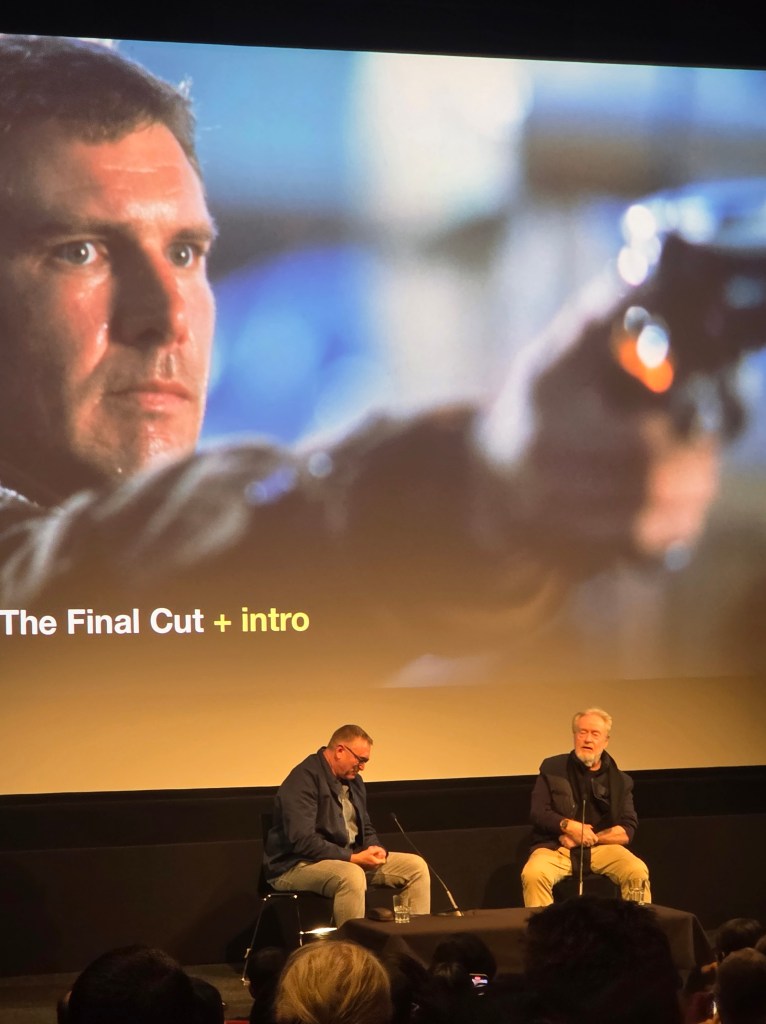

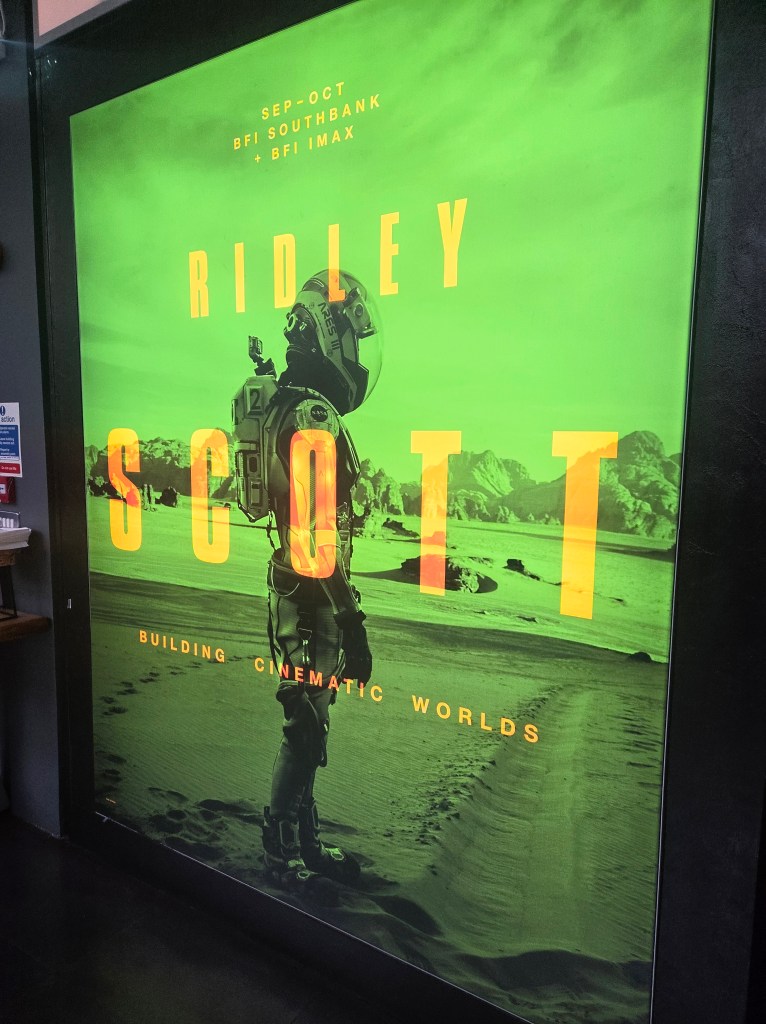
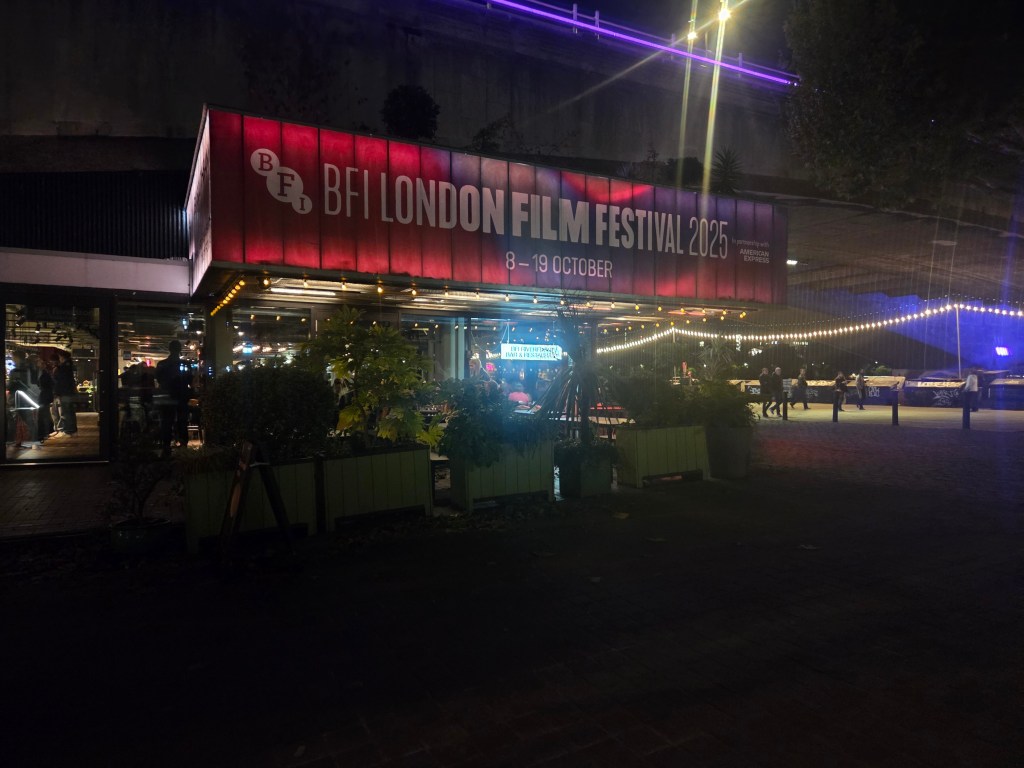
The director took to the stage to share what inspired him to make the film before showing a rare director’s cut. It came hot off the back of Alien and cemented him up there with the greats. After making Gladiator I and II, he was truly Hollywood Royalty.
In this dystopian thriller, Scott imagines human-like robots rebelling against their creators, exploring the concept of ‘singularity’ and the consequences if AI were to turn rogue – something universally relevant today.
The film is set in a future, now the past, where humans coexist with replicants, these created beings integrate into society, but their advanced intelligence leads humanity to consider their elimination.
Central to the narrative are the replicants created by the Tyrell Corporation, run by a man named Tyrell, who believes he is god-like. The film poignantly features the character played by Rutger Hauer, who confronts Tyrell and ultimately kills him when denied his wish for immortality.
Furthermore, the film’s exploration of what it means to be human feels particularly relevant in today’s AI-driven world.
The film delves into the meaning of humanity, the fragility of human life, and the ethics surrounding artificial intelligence – especially regarding sentience of systems and the potential threat to humanity.
When Ridley Scott released Blade Runner in 1982, a time when no one could foresee what life would be like in 2019. As that actual futuristic date arrived, AI was still in its infancy, but by 2025, AI is much more advanced and believably capable of achieving complete autonomy. In a few more years – this may all become a reality.
This event was a unique opportunity to see and hear from one of the greatest directors in living history.
Taking to the stage, Scott explained how he came to work on the film, saying: “In 1982, following my work on “Alien,” I was offered the script for “Conan the Barbarian” by Oliver Stone.
“His producer came to discuss it, and while I recognised the script’s merit, I had just completed a film steeped in blood and violence.
“I was not eager to dive into another similar project. Consequently, I returned to making commercials, a venture that was far more lucrative than feature films at the time.
“This effort consumed nearly a year of my life. I aimed to depict human beings as luxury items, and during this creative process, we crafted a script that introduced the concept of replicants.
“The film’s enduring relevance can be attributed in part to my unique visual flair; the way I envisioned the future feels both compelling and credible.
“One of my notable projects was a commercial for Steve Jobs titled “1984.” In this piece, we conjured a world that commented on the rise of dystopian surveillance, encapsulating the idea, “Guess what? We’ve created Big Brother.”
“Over my career, I traversed the globe, producing around 2,000 commercials. My home became a repository of various props and materials, including a significant amount of polystyrene. I was captivated by Hong Kong, with its almost medieval charm.
“When it came to casting Harrison Ford, I was already familiar with his portrayal of Han Solo. I reached out and invited him to a restaurant in London. That evening, he arrived straight from the set, donning the iconic hat and jacket from “Indiana Jones.”
Ridley said of his female lead: “I was specifically searching for someone who had a Vivien Leigh like quality and came across Sean Young who was perfect for Rachael – the humanoid who became the love interest of Rick Deckard, played by Harrison Ford and Daryl Hannah as another
Rutger Hauer’s presence in the film was striking and ideal for the role of Roy Batty, the leader of the replicants. He embodied both menace and fragility perfectly. One of the most memorable moments is his “Tears in the Rain” monologue before his death, which is further enhanced by the haunting score composed by Vangelis.
The haunting words are even more powerful today: “I’ve seen things you people wouldn’t believe. Attack ships fire off the shoulder of Orion. I watched C-beams glitter in the dark near Tannhauser Gate. All of those moments will be lost in time, like tears in the rain. Time to die.”
Ridley Scott spoke about the film’s haunting score, which was masterfully crafted by Vangelis, saying: “I was spellbound by Vangelis and his epic ‘”‘1492: Conquest of Paradise.” and we wanted him on board.
His parting remark was “People frequently ask why rain is a recurring element in my films. I tell them, “That’s precisely how I want it.”
 LUXE Serendipity magazine
Leave a comment