By Donna Richardson
In 2026, Slovenia feels like Europe’s most quietly assured wellness destination – the kind that doesn’t need to announce itself. The country’s appeal lies in its balance: polished but unpretentious, active yet deeply restorative. In Ljubljana, one of the continent’s greenest capitals, life moves at a civilised pace. Baroque façades and modernist design frame the Ljubljanica River, cyclists outnumber cars, and café terraces hum from morning espresso to evening natural wine. It is also the hometown of global basketball phenomenon Luka Dončić – a fitting detail in a nation where movement, discipline, and physical culture are second nature.
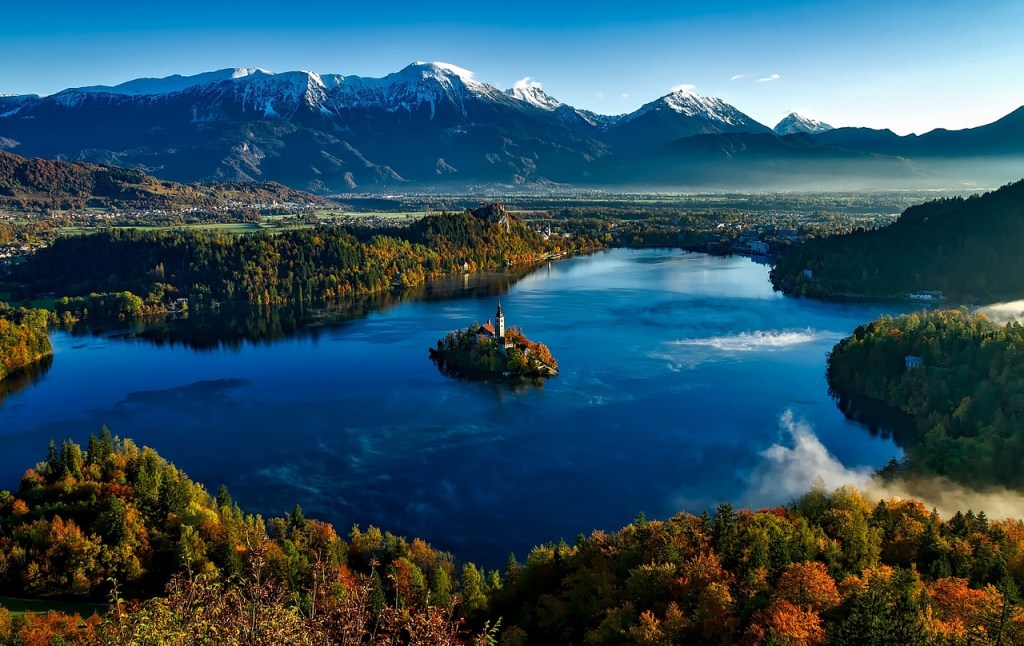
Beyond the city, Slovenia reveals its true wellness philosophy through landscape. Alpine air sharpens the senses around Lake Bled, where early-morning swimmers cut through glassy water beneath a medieval clifftop castle. Hiking trails wind through Triglav National Park, thermal towns like Rogaška Slatina and Dobrna offer centuries-old spa rituals refined for modern travellers, and boutique retreats blur the line between high design and deep nature immersion. Days here are active by instinct — cycling, wild swimming, forest bathing – and indulgent by reward, with mineral-rich waters, quietly exceptional cuisine, and hotels that prioritise sleep, stillness, and space.
With access to the Julian Alps, the Mediterranean coastline, the rugged Karst region, and the expansive Pannonian Plain, Slovenia offers an ideal backdrop for outdoor activities. Hikers can enjoy the Juliana Trail and nearby skiing resorts, where Slovenia has produced renowned athletes like Tina Maze and Boran Krizaj, and Elan skis were manufactured, making it an ideal destination for both summer and winter activities.
Llubjana
Stepping out into Ljubljana that morning, the city revealed itself at an unforced pace. Cobbled streets led past pastel façades and leafy courtyards, while the Ljubljanica River curved gently through the centre, its banks already alive with cyclists and early café regulars. The old town felt intimate rather than monumental – a place best explored slowly, pausing often – whether to admire the bridges designed by Jože Plečnik or to wander through the Central Market, where stalls brimmed with seasonal produce and local cheeses.
What struck me most was the city’s relationship with movement. Walking was not an obligation but a pleasure; green spaces appeared just when they were needed, and the absence of traffic lent the streets a rare sense of calm. Even at its most animated, Ljubljana retained a softness – a quality that made exploration feel restorative rather than exhausting. By midday, I understood why the city is so often cited as one of Europe’s most liveable capitals: it invites you to engage, then gently reminds you to slow down.

I spent the morning strolling along the river, lingering over coffee as Ljubljana eased into the day, locals drifting past long before the shops lifted their shutters. When they did open, the mix was thoughtfully curated rather than overwhelming – independent boutiques sitting comfortably alongside international names – offering a shopping scene that felt considered and quietly stylish. It was an easy way to pass the morning, unhurried and absorbing, carrying me naturally through to lunchtime.

On Friday, the riverside square blossomed into a lively open-air food market, a vibrant tapestry of sights, sounds, and aromas. Stalls brimmed with international delicacies -from sizzling Argentine steaks and fragrant Spanish paellas to delicate Korean poke bowls and towering Italian pizzas. The air was alive with the chatter of locals and travellers alike, the scent of spices mingling with the river breeze. Nearby, a couple danced to the gentle strains of a street musician, their effortless grace adding a touch of romance and whimsy to the sensory celebration.

Steeped in legend, Ljubljana is famously guarded by its dragon, a symbol of courage and power, proudly displayed atop the iconic Dragon Bridge. The city’s architectural elegance is further highlighted by the Triple Bridge, a graceful connection over the Ljubljanica River, where leisurely walkways meet bustling cafés and vibrant bars.
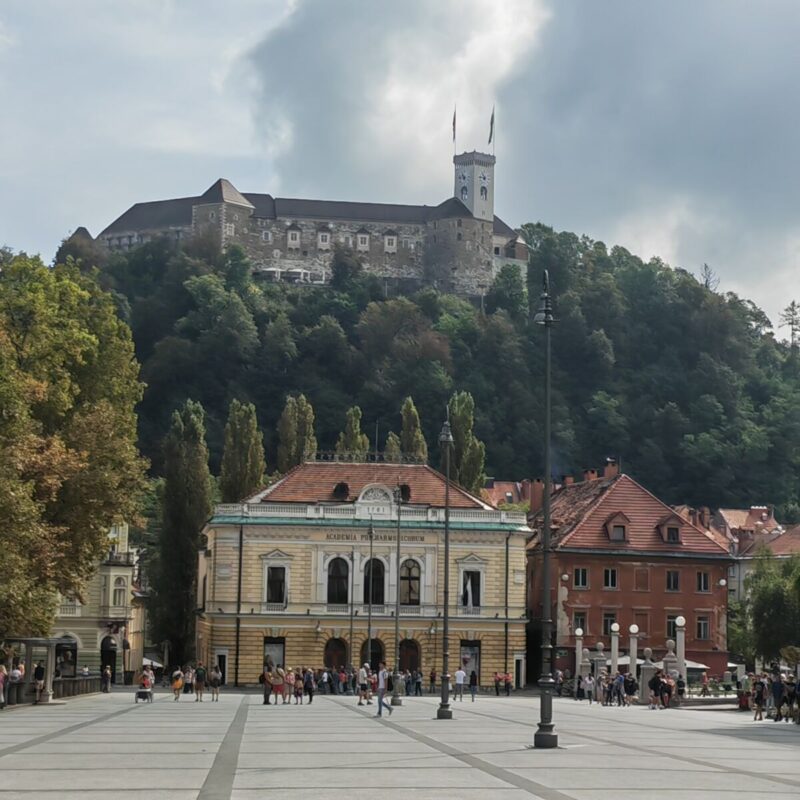
Slovenia also offers a rich tapestry of modern history. Once part of the Austro-Hungarian Empire and now a proud, independent nation, its people have navigated profound challenges with resilience and grace. We wandered through Ljubljana’s streets, including the urban playground frequented by Luka Dončić, before it was time to continue our journey to the next enchanting destination.
Lake Bled
Bled awaited, a quintessential Slovenian gem, where a fairytale castle perches dramatically atop a cliff and a tranquil island, crowned by a historic church, beckons pilgrims and travellers alike. With roots dating back to 1004, the town has welcomed Habsburg nobility and witnessed pivotal moments in former Yugoslav history, earning its reputation as a cherished summer retreat for generations of distinguished guests. That day, the lake’s crowning spectacle was a floating basketball tournament. Though Luka Dončić was unable to play, the atmosphere remained electric—guests savoured exquisite food and drinks, laughter rippled across the water, and athletes competed atop the shimmering lake, framed by Bled’s storied landscapes in a scene both surreal and unforgettable.

Reaching the island requires a ride on a traditional pletna boat, gliding across the serene waters of Lake Bled. Once ashore, a climb of 99 steps leads to the Church of the Assumption of Mary, where, inside, I discovered the enchanting legend of the wishing bell. This tradition has become an enduring part of local lore, captivating visitors from around the world.


Bled’s evolution into a health tourism haven in the 19th century owes much to Arnold Rikli, a Swiss naturopath who introduced therapeutic baths and scenic walking paths, laying the foundation for the town’s enduring reputation as a wellness destination.
Our stay at the Rikli Balance Hotel exemplified this legacy. A sanctuary of calm, the hotel features serene pools, a steaming hot tub, and a spa designed to rejuvenate body and mind. Cutting-edge wellness meets playful innovation here: technology seamlessly integrates with relaxation, including charming robot cat waitresses that whisk away our dishes with an almost mischievous grace. Every detail, from design to service, seemed crafted to cultivate both serenity and delight.

The spacious, alpine-inspired rooms offered breathtaking views of Bled’s serene landscapes, while dining options ranged from hearty local specialties to thoughtfully crafted, health-conscious meals. With such tempting fare at every turn, the allure of indulgence easily outweighed any thought of exercise – though, in this setting, it almost felt like a necessary part of the experience.

I knew I would work off any indulgence on an upcoming ride around the 2 km lakeside path, which quickly led us into the surrounding hills for a 10 km trek. The e-bikes were a revelation, effortlessly tackling the challenging terrain while allowing us to fully take in the stunning vistas. Naturally, the adventure worked up an appetite, and we rewarded ourselves with traditional Slovenian dishes along the way—each bite a perfect complement to the exhilaration of the ride.

Exploring traditions
For an authentic taste of Slovenian hospitality, we visited The Sound of the Holiday, a traditional Bled homestead that promises an unforgettable experience. Arriving at the charming cottage, we were warmly greeted by the owners, dressed in traditional attire, instantly immersing us in the region’s rich cultural heritage and timeless warmth.

They invited us in, and soon we were dancing to folk songs in celebration of the Upper Carniola festivities. Our evening was filled with laughter, food, and free-flowing wine. The night progressed into folk music, singing and traditional jigs- including a hat dance, between multiple courses of hearty regional dishes. I was fascinated by the hat dance.

We savoured a hearty serving of ričet, a traditional barley soup, presented in rustic earthen pots alongside fresh bread and savory sausages. The meal was complemented by robust local wine, poured generously from jugs, creating a convivial atmosphere that celebrated both Slovenian culinary tradition and warm, welcoming hospitality.

For dessert, we savoured a Potica nut roll, freshly baked in the clay oven at the heart of the cottage, which also lent the room a comforting warmth. Each bite was paired with a sip of local schnapps, a spirited accompaniment that perfectly captured the essence of Slovenian culinary tradition.

The next morning, Lake Bled itself became an arena. A basketball tournament emerged on a floating platform anchored at its centre, the court seemingly hovering above the water as mist rose and the Alps held their quiet watch. Luka was scheduled to play but withdrew for personal reasons – a detail that mattered less than expected in a country where movement is collective rather than performative. The game continued, carried by a relaxed rhythm of long lunches, chilled drinks, and sun-warmed conversation. From our seats in the hospitality section, looking out across the water to the court, the experience felt almost meditative: the soft echo of the ball, swimmers cutting through the lake, light shifting hour by hour. It was wellness in the Slovenian sense – active, social, unforced – where sport becomes celebration and stillness is never far away.
What sets Slovenia apart is its lack of excess. Wellness is not packaged or performative; it is lived. Luxury is measured in clean air, cold rivers, thoughtful architecture, and time – time to move, to rest, to recalibrate. For travellers seeking a destination that nourishes both body and mind without spectacle, Slovenia in 2026 feels less like a discovery and more like a return to something essential.
 LUXE Serendipity magazine
Leave a comment