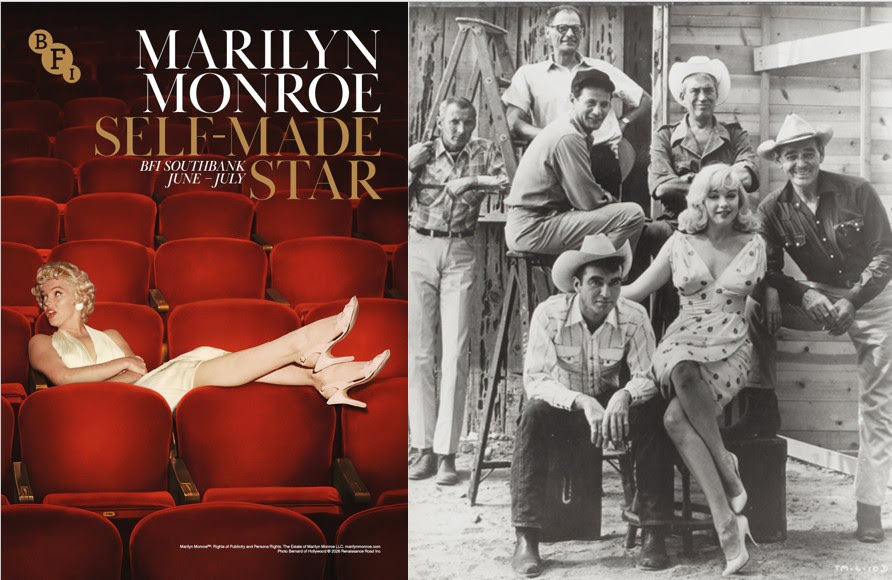
This year, in June 2026, marks the centenary of the birth of Marilyn Monroe – a woman whose talent, determination, and star power transformed the history of cinema and left an enduring legacy that continues to captivate audiences around the world.
Born on 1 June 1926, Marilyn Monroe rose from modest beginnings to become one of the most recognisable and beloved figures in film history. Yet she was far more than a glamorous icon or cultural symbol. She was a dynamic and intuitive performer, a determined creative force, and a trailblazer who challenged the Hollywood studio system. She fought for better scripts, greater artistic respect, and creative independence, becoming one of the first women since the silent era to establish her own production company. In doing so, she reshaped what it meant to be a female star in the film industry.
To honour this remarkable legacy, the British Film Institute is celebrating Marilyn Monroe’s centenary with a major two-month season at BFI Southbank in London. Titled “Marilyn Monroe: Self Made Star,” the season opens on 1 June 2026 – the date that would have marked her 100th birthday and runs throughout June and July. Curated by the BFI’s Lead Programmer Kim Sheehan, the programme invites audiences to rediscover Monroe’s work and to look beyond the stereotypes that have often defined her image.
Central to the celebration is a special rerelease of her poignant final completed film, The Misfits (1961), returning to cinemas across the United Kingdom and Ireland on 5 June 2026. Directed by John Huston and written by playwright Arthur Miller, the film is widely regarded as one of Monroe’s most powerful performances, revealing a depth of vulnerability, emotional honesty, and dramatic skill that continues to resonate with audiences today.
The season brings together many of Monroe’s most memorable and iconic performances, organised into three themes that reflect the breadth of her talent.
“Star Attractions” showcases the musicals and comedies that made her a global sensation, including Gentlemen Prefer Blondes, How to Marry a Millionaire, The Seven Year Itch, The Prince and the Showgirl, and Some Like It Hot. These films highlight her dazzling screen presence, impeccable comedic timing, and ability to combine humour, sensuality, and warmth in ways that defined an era of Hollywood entertainment.
“Dramatic Turns” focuses on the roles that demonstrated her range as a serious actor, from the psychological tension of Don’t Bother to Knock to the noir intensity of Niagara and the emotional depth of Bus Stop and River of No Return. In these performances, Monroe proved that she was capable of far more than the “blonde bombshell” stereotype, bringing intelligence, resilience, and emotional complexity to her characters.
“Scene Stealers” celebrates the smaller roles that helped launch her career, including appearances in All About Eve, Monkey Business, and Clash by Night. Even in brief moments on screen, she displayed the charisma and confidence that would soon make her one of the biggest stars the world had ever seen.
Throughout her career, Marilyn Monroe worked with some of the most influential directors and actors in Hollywood, earning critical acclaim and the admiration of audiences worldwide. Her performances combined glamour with humanity, vulnerability with strength, and humour with emotional truth. She possessed a rare ability to connect with viewers, making them laugh, dream, and feel deeply.
One hundred years after her birth, her influence remains undeniable. Her films continue to be watched, studied, and celebrated. Her image remains one of the most recognisable in popular culture. And her determination to control her own career and define her own identity continues to inspire artists, performers, and audiences everywhere.
This year, as we mark what would have been her 100th birthday, the BFI celebrate not only the legend on the screen, but the courageous and ambitious woman behind it – a true self-made star whose brilliance, resilience, and spirit will never be forgotten.
It marks the start of a major two month season this summer celebrating the centenary of the birth of cinema’s most enduring film star, Marilyn Monroe. MARILYN MONROE: SELF MADE STAR, curated by the BFI’s Lead Programmer Kim Sheehan, opens on 1 June, coinciding with Monroe’s 100th birthday, and runs throughout June and July, including a BFI Distribution rerelease of The Misfits. John Huston’s elegiac anti-Western, Monroe’s poignant final film, will be released in cinemas in the UK and Ireland on 5 June.
The cultural phenomenon of Marilyn Monroe has endured for generations, though she is often reduced to a sex symbol frozen in time, or a tragic figure with a focus on the scandals, marriages and troubles that punctuated her personal life. But Monroe’s achievements, legacy and contribution to cinema stretches so far beyond this reductive view. She was a dynamic and intuitive performer who knew how to use her intelligence and physicality as well as her style and carefully crafted image, as expressive instruments. She was also a determined and ambitious creative who revolutionised the promotion machine, challenged the studio system by striking to protest poor-quality scripts and became the first woman since the silent era to set up her own production company.
MARILYN MONROE: SELF MADE STAR brings together Monroe’s most memorable and iconic performances and is arranged under three loose themes; Star Attractions, musicals and comedies showcasing Marilyn Monroe at her triple threat best, Dramatic Turns, showing Monroe’s depth as a serious performer and Scene Stealers, small roles which made a big impact on her career. From her first major role in Ladies of the Chorus (1948) to her final unfinished project, Something’s Got To Give (1962), Marilyn Monroe worked with Hollywood’s biggest directors, including, Billy Wilder (Some Like It Hot, The Seven Year Itch), Fritz Lang (Clash By Night), Georges Cukor (Let’s Make Love, Something’s Got To Give), Howard Hawks (Gentlemen Prefer Blondes, Monkey Business), John Huston (The Misfits), Joseph L. Mankiewicz (All About Eve), Laurence Olivier (The Prince and The Showgirl), Otto Preminger (River of No Return), and with onscreen film talent including Barbara Stanwyck, Bette Davis, Betty Grable, Cary Grant, Clark Gable, Cyd Charisse, Dean Martin, Ginger Rogers, Jack Lemmon, Jane Russell, Joseph Cotton, Lauren Bacall, Laurence Olivier, Montgomery Clift, Robert Mitchum, Tom Ewell, Tony Curtis, Yves Montand and more.
Central to the BFI’s centenary celebration is BFI Distribution’s rerelease of The Misfits (1961), Monroe’s poignant final film, returning to cinemas in the UK and Ireland on 5 June. John Huston’s tragic swan song to the Western, written by Monroe’s then-husband Arthur Miller, is a touching and off-beat drama of broken-hearted cowboys and broken-down marriages, co-starring Clark Gable and Montgomery Clift as an aging cowboy and a rodeo-rocked bull rider, both with bittersweet memories of a west that’s no longer wild. Infused with the promises of what could have been if she had been given more time to explore her skills as a dramatic performer, Monroe delivers one of her very best performances, pouring a devastatingly raw vulnerability and a sincere sentimentality into Roslyn, a delicate divorcee who moves out to the Nevada desert, a gathering ground for misfits, burnouts and empty bottles, and who finds herself falling for a similarly lost cowboy.
In the century since the birth of Norma Jeane, BFI Southbank invites audiences to look more deeply into the cinema of Marilyn Monroe, to appreciate her craft, charisma and ebullience and celebrate the fiercely talented woman behind the silver screen legend, who was truly ahead of her time.
Kim Sheehan, BFI Lead Programmer and Marilyn Monroe: Self Made Star season curator said, “Marilyn Monroe was quite possibly the biggest star cinema ever saw and will ever see. She was the original triple threat and deserves much credit for crafting her own image and stardom. In so many ways she was a woman ahead of her time. I hope audiences come to the season to discover or rediscover the dynamite presence she brings to films like Gentlemen Prefer Blondes and How to Marry a Millionaire, as well as the heartbreaking depth of her work in The Misfits. Even her smaller roles, with scene‑stealing turns in Clash by Night and All About Eve, reveal the range and nuance she possessed. This season showcases the many qualities that made Monroe a singular and enduring force in cinema history. There is no better place to experience them than communally on the big screen.”
MARILYN MONROE: SELF MADE STAR
Star Attractions
Musicals and comedies showcasing Marilyn Monroe at her triple threat best
Monroe delivers a luminous performance in her first major role in the long forgotten B movie musical Ladies of the Chorus (1948) The then 22-year-old Monroe performs with her natural voice and builds the foundations of her future star persona with her gift for comedy and music, culminating with the catchy if questionable sugar baby anthem Every Baby Needs a Da-Da-Daddy.
Marilyn Monroe and Jane Russell make a magnetic duo in Howard Hawk’s classic comedy musical, Gentlemen Prefer Blondes (1953) as two showgirls looking for love and financial security – but not always in that order. Monroe shines as the jewel-loving Lorelei, injecting a nuanced mixture of sweetness, cunning intelligence and flirtatious humour to the role. Her iconic performance of Diamonds Are a Girl’s Best Friend is the definition of star power.
One of the first films produced in CinemaScope format, How to Marry a Millionaire (1953) Jean Negulesco’s vibrant Technicolor romantic comedy, is a visual feast of fabulous costumes and elegant sets, featuring a dazzling Monroe who teams up with Betty Grable and Lauren Bacall on a mission to marry wealthy suitors. However, it is Monroe’s brilliant physical comedy which makes the film so memorable.
Monroe’s first collaboration with Billy Wilder on The Seven Year Itch (1955) created the most iconic image in her career but also capitalised on her comedic talents and ability to blend sensual sexuality with naïve sweetness. When his wife and son leave on vacation, a middle-aged publishing executive (Tom Ewell) is left to endure a sweltering New York summer with his increasingly overactive imagination and Monroe as the ultimate middle-aged male fantasy.
Monroe produced The Prince and the Showgirl (1957), a collaboration with Laurence Olivier, after her company, Marilyn Monroe Productions, purchased the rights to Terence Rattigan’s play The Sleeping Prince. Although Olivier made the Prince Regent’s role in the stage version very much his own, here he is outshone by Monroe’s natural charm and ease as the vivacious chorus girl Elsie Marina.
Marilyn Monroe is terrific in one of her most celebrated roles, as Sugar, a singer caught up with some unusual undercover musicians in Billy Wilder’s crime comedy caper, Some Like It Hot (1959). Monroe brings an irresistible charm and vulnerability that gives Wilder’s comedic masterpiece its emotional anchor. Her sharp comedic timing and sparkling chemistry with her co-stars, Tony Curtis and Jack Lemmon helped Monroe land a Golden Globe. The season will premiere a new 35mm print created for the BFI, made with funding from the National Lottery and the additional support of donors to our Keep Film on Film campaign.
Although this was one of Monroe’s least favourite roles and only undertaken to complete a studio contract, George Cukor’s Let’s Make Love (1960) holds up as a showcase for her exquisite command of song and dance. Her seductive rendition of My Heart Belongs to Daddy is an electric highlight.
Dramatic Turns
Serious roles which allowed Marilyn Monroe to demonstrate her depth as an actor
Marilyn Monroe thrills as an unstable babysitter in Roy Ward Baker’s psychological thriller Don’t Bother to Knock (1952), starring alongside Richard Widmark and Anne Bancroft Monroe is so fun to watch, teetering on the edge of madness, veering between fragile, glamourous and frightening personalities.
Featuring one of her very best dramatic performances, Monroe is the sultry wife of Joseph Cotton’s unstable army veteran in Henry Hathaway’s Niagara (1953), whose presence and troubled relationship unsettles the honeymoon of another couple at Niagara Falls. Sensual, dazzling and conniving, Monroe’s hip-swinging femme fatale drives this thrilling noir with a skilful ability to use her body as an instrument.
Monroe excels in Otto Preminger’s River of No Return (1954), starring alongside Robert Mitchum’s released prisoner, in a role that pivoted away from the ‘dumb blonde’ stereotype she had been confined to earlier in her career. She brought grit, resilience and maternal warmth to her character Kay, while her dedication to her craft saw Monroe learn to play guitar and perform several of her own stunts.
Bus Stop (1956) was the first film Monroe made under a newly negotiated contract for more serious parts, and her unpolished saloon singer Chérie, was a meaty role packed with new challenges: an Ozark accent, singing off-key, unglamorous costume and unflattering make-up. Monroe rose to the occasion and the fruits of her studies at the Actors Studio emerge in Joshua Logan’s romantic comedy-drama.
Happy 100th Birthday, Marilyn. Your legacy lives on, and your star still shines.
 LUXE Serendipity magazine
Leave a comment