By Donna Richardson
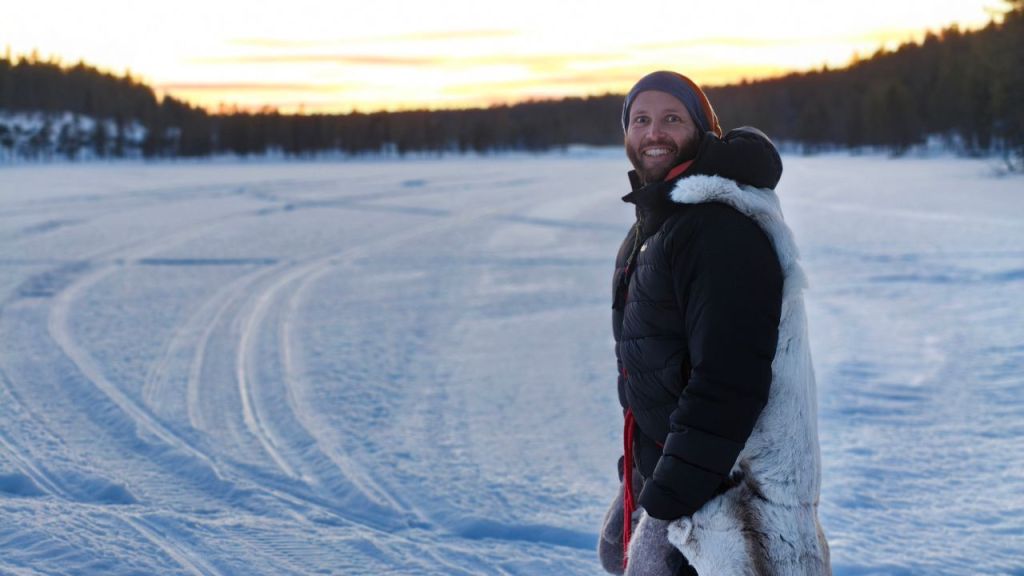
In the far north of Europe, where forests thin into tundra and the sea freezes into shifting white plains, a British artist is preparing to cross borders not just of geography -but of time, politics, and environmental possibility.
In March 2026, Bristol-based theatremaker Tom Bailey will set out on a 600-kilometre solo journey through the Arctic borderlands of Norway, Finland and Sweden. Moving by ski, sled, foot and boat, he will spend two months travelling slowly through some of the most rapidly changing landscapes on Earth.
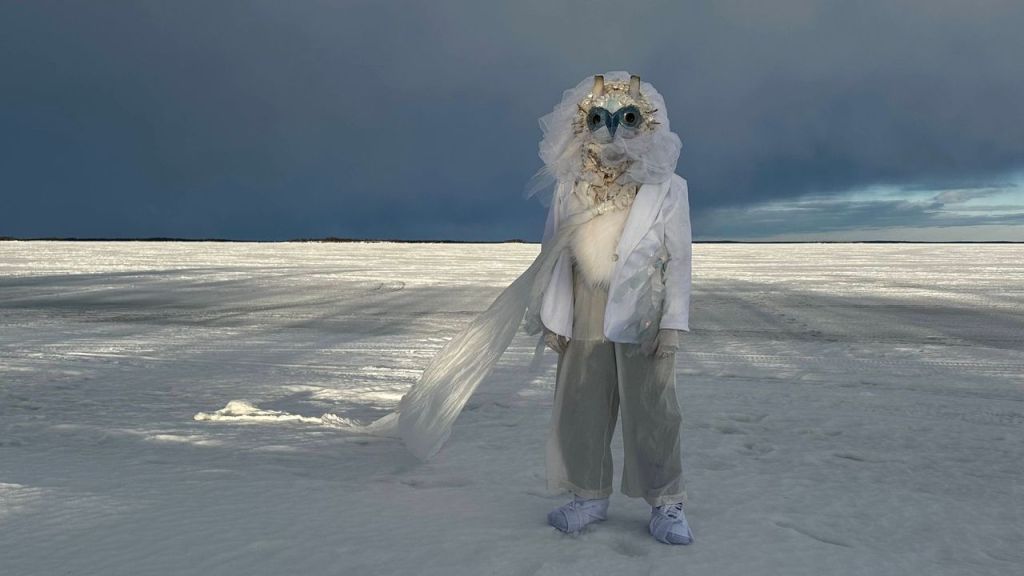
The project, titled Threshold – A Wild New Border Journey, begins in the northern Norwegian town of Kirkenes, a place where Norway meets Russia and Finland, and where the geopolitical map feels as fluid as the frozen terrain itself. From there, Bailey will trace a westward path through Arctic Finland and Sweden before continuing toward the Lofoten Islands, ending at the Stamsund International Theatre Festival in May.
But this is not a journey in the traditional sense. It is being framed as a piece of performance in motion- an “ultra-slow artwork” designed to interrogate what it means to tour internationally in a climate crisis.
“The Arctic is changing faster than anywhere else on the planet,” Bailey says. “This journey is about asking what performance-making looks like when we treat landscape, time and environmental responsibility as creative forces rather than obstacles.”
A landscape in flux
The route threads through a region at the centre of global attention. As sea ice retreats, Arctic shipping routes are opening and previously inaccessible resources are becoming contested. Political interest in the far north has intensified in recent years, with debates over sovereignty, indigenous land rights, and resource extraction reshaping the region’s map.
Bailey’s journey moves through this tension quietly, on human scale. Instead of air travel between festival cities, he will traverse frozen lakes, dense pine forest and coastal mountain ranges- engaging directly with the terrain and the people who live within it.
Along the way, he will meet local communities, artists and researchers, gathering stories and observations that will feed into a new performance work scheduled for 2027. These encounters are not incidental; they are the structure of the piece itself.
Touring reimagined
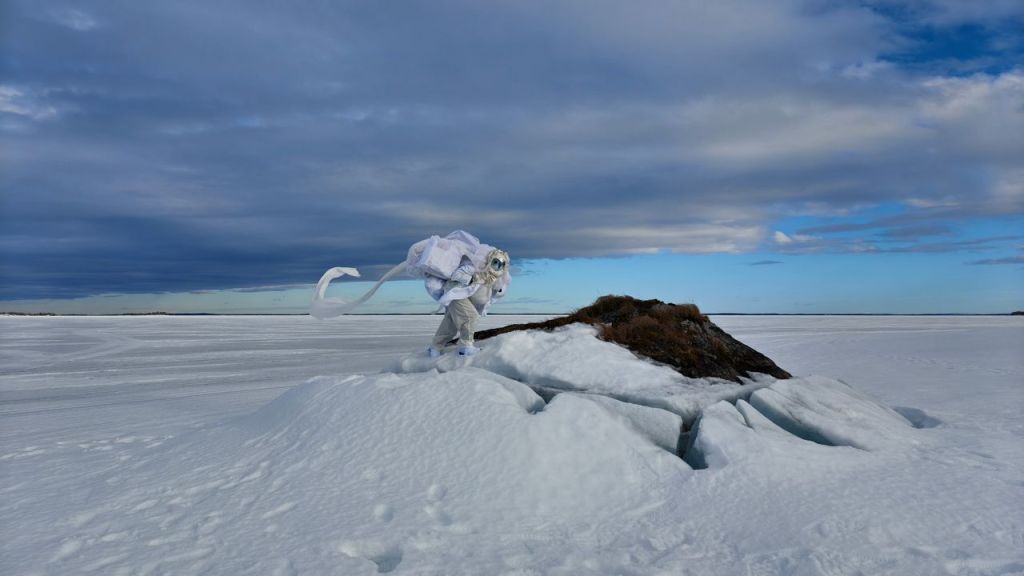
The project launches with workshops at the international arts festival Barents Spektakel in February 2026, where Bailey will begin testing ideas around “slow touring” and environmental responsibility in performance practice.
From there, the journey becomes both fieldwork and provocation: what if touring artists travelled at the speed of weather systems rather than aviation routes? What if the journey itself became the performance?
Working in parallel, designer Natasha Soonchild will develop the visual and spatial language of the eventual stage work from an artist residency in Kirkenes, responding in real time to Bailey’s movement through the Arctic.
The project is produced by UK theatre company MECHANIMAL, with international partners including Danish festival ILT Festival and dramaturg Gulli Sekse in Norway. It is supported by cultural and climate-focused organisations including Arts Council England, Arts Council Norway, the Danish Arts Foundation, and environmental consultancy Julie’s Bicycle.
Walking into uncertainty
At its core, Threshold is less about arrival than attention. The journey resists efficiency in favour of exposure—of cold, silence, distance, and encounter. Bailey’s route crosses national borders, but also more fragile ones: between stability and collapse, between cultural exchange and environmental breakdown.
As melting ice redraws coastlines and opens new geopolitical pathways, the Arctic is no longer as remote as it once was. It is becoming central to global futures.
Bailey’s response is to slow down.
And in doing so, he reframes travel itself—not as movement between fixed points, but as a form of listening to a landscape in transformation.


Leave a comment