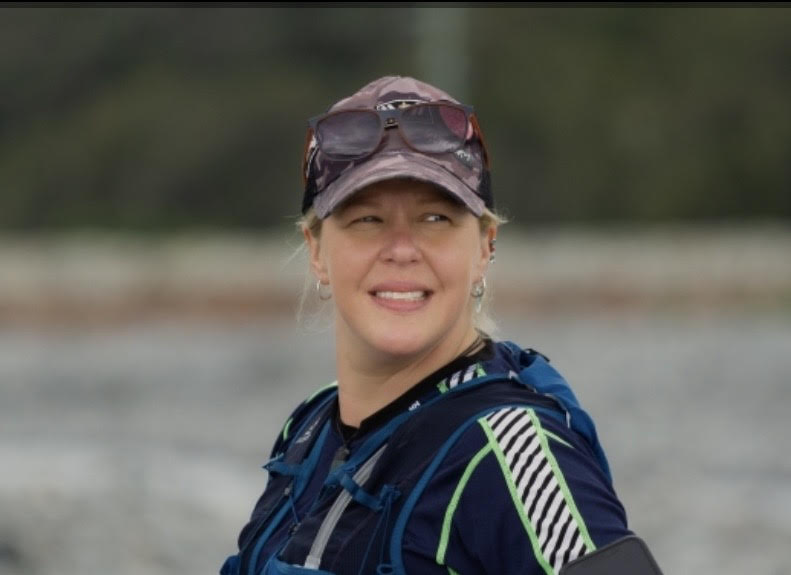
Holly Budge, 47, a British adventurer from Farnham, Surrey, who has summited Mount Everest and was the first woman to skydive Everest, says her time patrolling on the front line with female anti-poaching rangers in Africa was “far more frightening” than any expedition she has undertaken.
Now, through the global campaign World Female Ranger Week (23–30 June 2026), Budge is using her platform to shine a light on the women she describes as “the real heroes” of conservation – those working daily to protect wildlife in some of the world’s most dangerous environments.
“I’ve stood on top of Everest and jumped out of planes at high altitude, but nothing compares to walking through the bush knowing there are armed poachers nearby,” she says. “These women do it every day, not for recognition, but because it’s their job. Many are also the primary breadwinners for their families. Yet fewer than one in ten rangers are women. Increasing female participation isn’t just the right thing to do, I believe it’s key to strengthening both conservation and communities.”
Budge, who has spent more than a decade working alongside female ranger teams across Africa and beyond, founded World Female Ranger Week – now in its sixth year – through her UK charity How Many Elephants, to raise awareness, funding, and support for women on the frontline of conservation.
Her campaign comes at a critical time. Conservationists estimate the world is currently short of 1.5 million rangers needed to meet global biodiversity targets, including the international goal to protect 30% of land and ocean by 2030. At the same time, women remain significantly underrepresented, making up less than 11% of the global ranger workforce.
A recent study presented at the United Nations Environment Assembly also found that global biodiversity funding remains billions of dollars short, underlining the urgent need for both increased investment and workforce expansion.
Budge believes increasing the number of female rangers could form part of the solution – not only for conservation, but for the communities living alongside wildlife. She says, “If we supported more women into these roles, the impact would go far beyond protecting wildlife. “You create a ripple effect: stronger families, more resilient communities, and long-term change.”
If half of the global ranger shortfall were filled by women, an estimated 750,000 female rangers could be employed worldwide – generating around $225 million per month in wages flowing directly into local economies. With women typically reinvesting up to 90% of their income in their families, this could help support millions of children by improving access to education, healthcare, and opportunity.
Now in its sixth year, World Female Ranger Week has grown into a global movement, reaching more than 500 million people, and amplifying the voices of female rangers and the challenges they face – from dangerous working conditions to limited resources and gender discrimination.
For Budge, the mission is deeply personal. “These women are protecting some of the most vulnerable wildlife on the planet, often at great personal risk,” she says. “The least we can do is make sure their stories are heard and their work is supported.”
WFRW Ambassador Dr. Gladys Kalema-Zikusoka, founder of Conservation Through Public Health (CTPH), Uganda, says: “World Female Ranger Week plays a vital role in raising awareness of female rangers and advancing gender equity in conservation.”
Follow and support the campaign: www.worldfemalerangerweek.org @worldfemalerangerweek #worldfemalerangerweek


Leave a Reply