By Donna Richardson
On the edge of the Welsh Borders, where the rolling hills of Herefordshire and Shropshire meet, wildlife is never far away. Kingfishers flash across rivers, hares dart through fields and robins sing from hedgerows. It is this landscape and the creatures that inhabit it that have inspired sculptor Tim Roper throughout his life.
Working from his workshop near the historic market town of Ludlow and appearing on Countryfile, Tim has become one of Britain’s most respected wildlife sculptors, creating beautifully handcrafted steel sculptures that capture not just the appearance of an animal but also its movement, character and spirit.
From soaring hummingbirds, leaping salmon and graceful flying fish, every piece begins in exactly the same way – by watching nature.
“I’ve always been fascinated by wildlife,” Tim says. “As a boy, I’d come home from school, put my wellies on and disappear into the woods. I’d spend hours watching birds, looking at fish in the streams and just exploring. It was an idyllic childhood.”
Those early adventures continue to shape his work today. *Unlike many artists who work solely from photographs, Tim prefers to study how animals behave.
He watches the way a robin tilts its head, how a hare pauses before running or how a kingfisher balances for a split second before diving.

“The smallest adjustment to a bird’s posture can completely change its character,” he explains. “I’m always trying to capture that moment that makes people feel as though the sculpture could move.”
It is perhaps no surprise that his sculptures feel so alive. Before becoming an artist, Tim worked as an engineer, a career that taught him about balance, structure, and precision. “I’ve always loved making things,” he says. “Engineering taught me how materials behave, but sculpture gives me the freedom to create something full of life.”
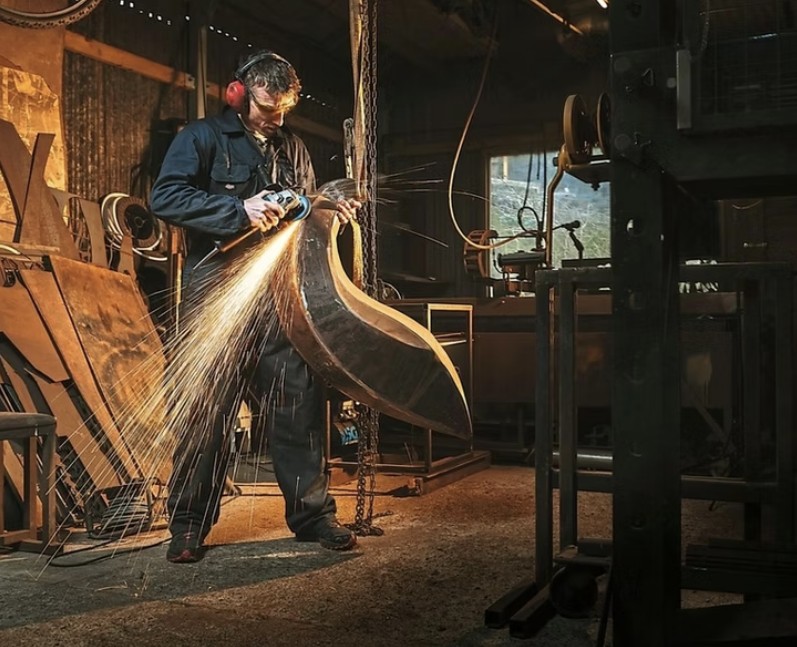
Step inside his workshop and it quickly becomes clear that art and engineering work hand in hand. Computer designs sit alongside traditional tools. Sheets of steel are cut, welded, heated in a hand forge, shaped beneath a hydraulic press, ground and polished by hand before gradually becoming birds, fish and woodland animals.
Each sculpture is individually made, allowing the metal to develop its own character as the work progresses.
That remarkable craftsmanship recently reached a national audience when Tim featured on the BBC’s Countryfile. Viewers were captivated by both the sculptures and the painstaking skill that went into them, resulting in an overwhelming response and commissions from across the country. Despite the growing recognition, inspiration still comes from the countryside surrounding his workshop.
“The wildlife here is incredible,” he says. “Every walk gives you something new to look at.”
We walked up to the top of his hill where he hopes to build a shepherd’s hut, and we looked over the area of natural beauty – it is such a view, worthy of art. It is at the edge of the woods where Tim once searched for and observed wildlife.
While British wildlife remains at the heart of his work, travel has also opened up new ideas. Journeys through Madagascar, Costa Rica, the Caribbean, Africa and Europe have inspired collections celebrating hummingbirds, sharks and marine life. One visit to St Lucia proved especially memorable, where watching flying fish skim across the Caribbean Sea beneath the towering Pitons inspired one of his best-known collections.
“It was one of those moments you never forget,” Tim recalls. “We also climbed one of the Pitons and saw hummingbirds in the wild. Seeing those birds moving so quickly gave me a completely different understanding of how they should be sculpted.”
Adventure has often accompanied those travels. Tim spent several weeks working with the production crew of The Grand Tour during filming in Madagascar, Mauritania, Senegal and Zimbabwe, preparing locations before Jeremy Clarkson, Richard Hammond and James May arrived.
There are moments in nature that last only seconds. The flash of a kingfisher skimming low across a river. A hare pausing in the long grass before disappearing over the brow of a hill. The quiet confidence of a robin perched on a garden gate, tilting its head as though considering the world around it. Most of us scarcely notice these fleeting encounters before they are gone. But Tim has spent a lifetime noticing.
Growing up in the Welsh Borders, where the rolling hills of Herefordshire and Shropshire dissolve into ancient woodland, he spent almost his entire childhood outdoors. As soon as school ended, he would pull on his wellington boots and disappear into the woods, often remaining there until dusk. He wandered beside streams watching trout hold their place against the current, listened to birdsong echo through the trees and explored every corner of the countryside with the curiosity that only childhood can bring.
“It was an idyllic childhood,” Tim recalls. “I’d spend hours watching birds, studying fish in the streams and simply exploring.”
Those early adventures gave him far more than happy memories. They taught him patience and observation. Long before he became a sculptor, Tim had learnt to see not simply what wildlife looked like, but how it lived. The slightest tilt of a robin’s head, the tension in a hare before it bolts, the split-second balance of a kingfisher before it dives-these were the moments that fascinated him.
Decades later, those same moments continue to shape every sculpture he creates.
Working from his workshop near the historic market town of Ludlow, Tim has become one of Britain’s most respected wildlife sculptors, creating handcrafted steel sculptures that capture not merely the form of an animal but its movement, personality and spirit.
Every sculpture begins in exactly the same place—not in the workshop, but in nature itself. Tim spends countless hours observing wildlife in the field, searching for the subtle shifts in posture and balance that reveal an animal’s character.
“The smallest adjustment to a bird’s posture can completely change its character,” he explains. “I’m always trying to capture that moment that makes people feel as though the sculpture could move.”
It is this attention to the almost imperceptible that makes his work feel so alive. His sculptures do not simply resemble birds or animals; they suggest movement, anticipation and life itself. A robin appears ready to hop from its perch. A salmon seems suspended in the instant before it breaks the water’s surface. A kingfisher balances for a heartbeat before its dive.
Before becoming an artist, Tim studied at Engineering at Brunel University, which taught him about precision, balance and the behaviour of materials. but he has always had an appreciation of the arts and sculpture in particular.
“I’ve always loved making things,” he says. “Engineering taught me how materials behave, but sculpture gives me the freedom to create something full of life.”
Inside his workshop, engineering and artistry exist in perfect harmony. Computer-aided design sits comfortably alongside traditional craftsmanship. Sheets of steel are cut, welded, heated in a hand forge, shaped beneath a hydraulic press and painstakingly ground and polished before gradually becoming birds, fish and woodland creatures.
Yet there is something quietly magical about watching rigid steel soften beneath Tim’s hands. Through decades of experimentation with welding, fabrication and finishing techniques, he has developed a style that makes steel appear remarkably fluid despite its industrial origins. Wings seem ready to lift into flight. Feathers catch the light. Fins appear to ripple as though moving through water. Steel, somehow, begins to breathe.
Each sculpture is individually handcrafted, allowing the material itself to influence the finished form and ensuring that no two pieces are ever identical. Every weld, every curve and every polished surface reflects decades of craftsmanship and an enduring fascination with the natural world.
That craftsmanship recently reached a national audience when Tim featured on the BBC’s Countryfile. Viewers were captivated not only by the finished sculptures but by the extraordinary skill behind them, resulting in commissions from collectors across Britain.
Despite that recognition, inspiration still waits just beyond the workshop door.
“The wildlife here is incredible,” he says. “Every walk gives you something new to look at.”
Although the wildlife of the Welsh Borders remains the soul of Tim’s work, travel has widened his horizons and enriched his imagination. Some of his most memorable inspirations have been found thousands of miles from home.
Travelling with his wife, Vanessa, and their two children has continued to nurture that same spirit of discovery. Together they have explored China, Japan, South Korea and Thailand, while journeys into the ancient rainforests of Borneo led them in search of one of nature’s greatest curiosities -the spectacular Rafflesia, the world’s largest flower. Each destination has revealed unfamiliar landscapes, remarkable wildlife and fresh perspectives, quietly enriching the forms, movement and composition that define Tim’s sculpture.
Yet every adventure, however extraordinary, has reinforced the lesson first learnt as a boy wandering the woods of the Welsh Borders -that nature rewards those who slow down. Whether standing beneath towering rainforest trees, watching hummingbirds dart between tropical flowers or simply observing a robin in an English hedgerow, Tim’s process has never changed. It begins with patience, curiosity and a willingness to look a little closer
On the Caribbean island of St Lucia, he watched flying fish skim effortlessly across turquoise water beneath the towering Pitons, their silver bodies glinting in the sunlight as they appeared to dance between sea and sky. The spectacle became the inspiration for one of his most celebrated collections, capturing in steel the elegance and energy of creatures that seem to defy gravity.
The island offered another revelation. Hummingbirds hovered among tropical flowers with astonishing speed, vanishing almost as quickly as they appeared.
“We climbed one of the Pitons and saw hummingbirds in the wild,” Tim says. “Seeing those birds moving so quickly gave me a completely different understanding of how they should be sculpted.”
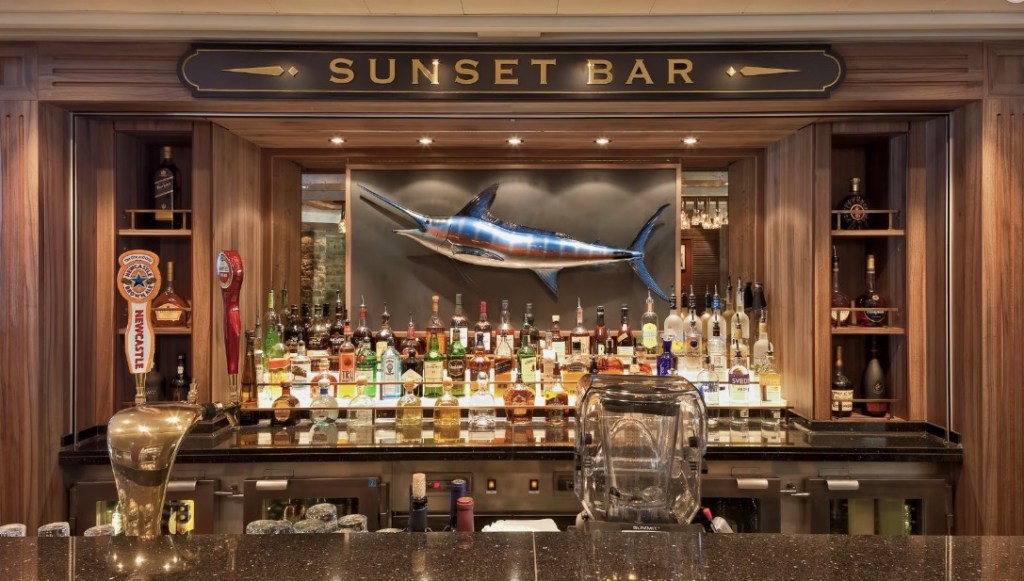
He also saw flying fish who mesmerised him, and he then brought that inspiration home to make his own sculptures including a Marlin for a cruise ship.
The encounters with wildlife reaffirmed something he had always believed: no photograph can truly replace watching wildlife in its natural environment. Whether it is a robin in a Herefordshire hedgerow or a hummingbird suspended above a Caribbean flower, movement is everything.
Tim spent several weeks working with the production crew of The Grand Tour during filming in Madagascar, Mauritania, Senegal and Zimbabwe, helping prepare remote locations before Jeremy Clarkson, Richard Hammond and James May arrived.
One of Tim’s most extraordinary adventures came not through sculpture, but through television. He spent several weeks working with the advance production team behind The Grand Tour, travelling across Madagascar, Mauritania, Senegal and Zimbabwe to prepare locations before Jeremy Clarkson, Richard Hammond and James May arrived.
Long before the cameras rolled, Tim and the crew were already deep in some of Africa’s most remote landscapes, scouting routes, preparing filming locations and solving the countless challenges that come with taking a major television production into the wilderness. River crossings, rough terrain and unpredictable conditions were all part of the job.
“We were there before everyone else, making sure everything was ready,” Tim recalls. “Sometimes we were on rescue boats during river crossings in case one of the vehicles got into difficulty.”
On more than one occasion, that preparation proved invaluable. When the presenters encountered problems crossing rivers, Tim and the advance crew were called into action, helping recover vehicles and ensuring Jeremy Clarkson, Richard Hammond and James May could continue their journey safely. It was a role that demanded calm heads, practical engineering skills and the ability to adapt quickly in some of the most challenging environments imaginable.
Away from the drama of the filming, Tim found himself quietly observing the presenters much as he observes wildlife. Clarkson’s larger-than-life personality was unmistakable, but behind the humour and television persona Tim saw someone who was genuinely fascinated by the places they visited and the people they met. Hammond’s boundless enthusiasm and May’s measured, thoughtful approach completed a partnership that worked as naturally off-camera as it did on-screen.
For Tim, however, the greatest reward was the landscape itself. Travelling through vast wilderness, witnessing wildlife in its natural habitat and experiencing places few people ever visit reinforced the philosophy that has guided his work since childhood: slow down, watch carefully and nature will reveal its secrets.
The work took him far beyond the places most visitors ever experience. Days were spent crossing rivers, travelling through vast wilderness and preparing routes for the presenters and camera crews. Wildlife was never far away, and seeing animals in landscapes so untouched only reinforced the importance of observing them in their natural environment.
“We were setting everything up for the camera crews,” Tim recalls. “There were river crossings where we were on rescue boats in case anyone fell in, and long days travelling through incredible wilderness. Seeing wildlife in those environments was unforgettable.”.
Back in Britain, Tim’s sculptures have become familiar landmarks in public spaces. His work has been commissioned for East Midlands Airport and can also be seen in Dudley Zoo, Telford, Newport, Manchester, Shrewsbury, Bovington, and Kinlochleven in Scotland, where thousands of people encounter it every year.
In 2005, he was fortunate enough to be able to spend a month travelling around China and he said: “I loved every minute of it, travelling by sleeper train we slowly made our way from Beijing to Xian then to Chengdu, stopping off at many places along the way.
“I have been practising kung-fu for twelve years and had always dreamt of visiting the famous Shaolin Temple at Song Shan.
“It seemed that every time we went for a walk, whether it be up a sacred mountain or in a small park in a nondescript industrial city, we came across many small garden pavilions (Ting) which were a perfect place to relax and shelter from the intense summer heat.
“I quickly became obsessed with these small buildings, taking a picture of each one we came across. They would appear, out of the blue, in the most unlikely places. I knew that a pagoda like this would make the most amazing garden feature.
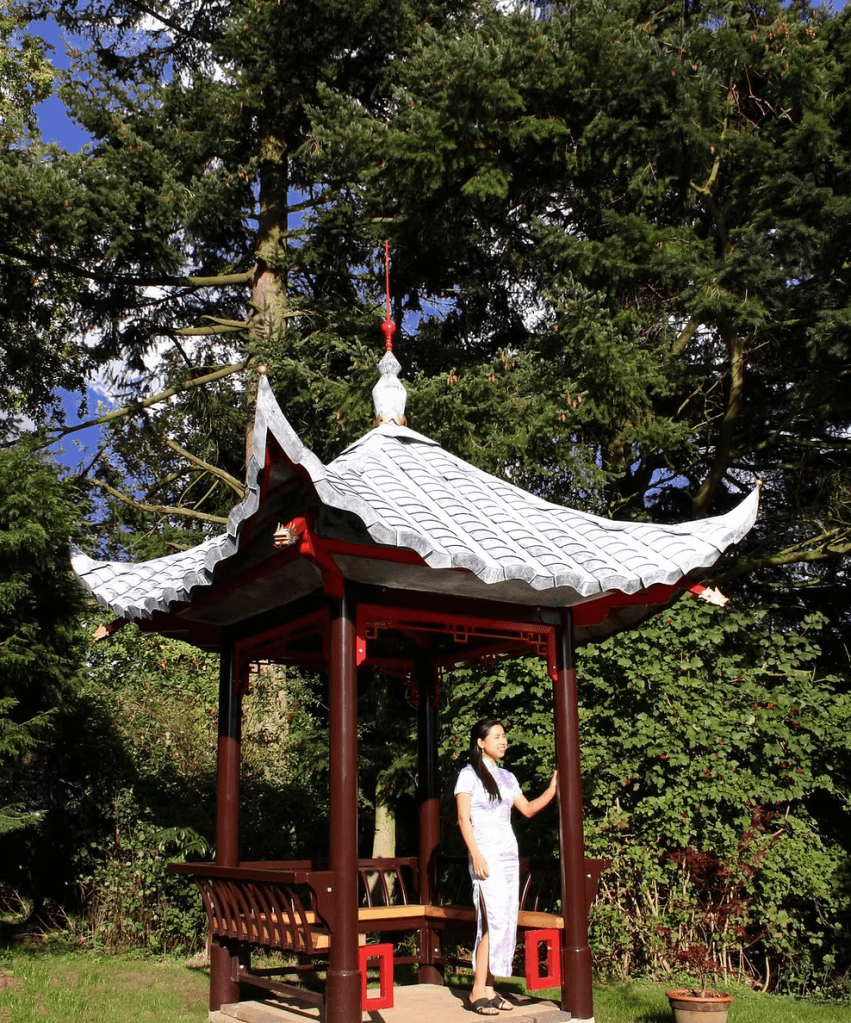
“I returned to China in 2007 for a three-month trip and spent some time looking at the famous gardens in Suzhou, Tongli, and Shanghai. I also travelled around the Huangshan Mountains, Wuyuan, Wudang Shan, Beijing, Hong Kong, Nanjing and many other places in China. I have taken many pictures of the gardens and the buildings within them. His sculptures challenge perceptions of steel. Rather than celebrating its weight and permanence, Tim reveals its elegance and rhythm, coaxing rigid metal into feathers, fins and wings with remarkable delicacy. There is an extraordinary paradox at the heart of his work: one of the hardest materials known to man is transformed into something that appears almost weightless.”
Among the projects he remembers most fondly was helping restore a historic Dunkirk “Little Ship” that had taken part in Operation Dynamo during the Second World War. Once owned by the skipper of Sir Laurence Olivier, the vessel had been discovered abandoned before being painstakingly restored to the water.
“The first time we launched her again was on the anniversary of Dunkirk,” Tim says. “That was a very special day.”
We saw the same ship when we went down to Henley Festival recently in a remarkable twist of fate. We walked around the sculpture park and art tent and saw Tim’s mind thinking and creating as we enjoyed this riverside festival and admiring the boats and nature.
Whether creating an intimate study of a garden robin, a kingfisher poised above a river, or a dramatic marine sculpture inspired by distant shores, Tim approaches every commission with the same quiet philosophy. Every piece is individually handcrafted, allowing the material itself to guide the finished form and ensuring that no two sculptures are ever identical.

“I never stop looking,” he says. “Nature is always changing, and there’s always something new to learn.”
Standing in his workshop, surrounded by birds slowly emerging from sheets of steel, one becomes clear: Tim Roper is not simply creating sculptures. He is preserving moments that might otherwise pass unnoticed: the shimmer of a kingfisher over still water, the leap of a salmon against the current, the effortless glide of a flying fish across the Caribbean Sea, or the quiet confidence of a robin greeting the dawn. His sculptures are not merely representations of wildlife; they are expressions of movement, balance and memory. Forged from steel but inspired by a lifetime of watching the natural world, they invite us to pause, look more closely, and rediscover the extraordinary beauty hidden within the everyday.
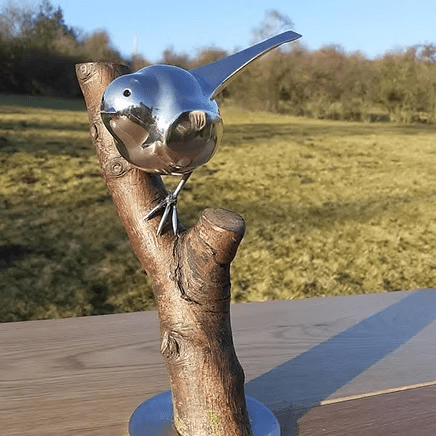
For Tim, every journey has begun in the same place -with a curious boy disappearing into the woods in a pair of wellington boots. Decades later, whether he is watching wildlife on the Welsh Borders or beneath tropical skies half a world away, that sense of wonder remains undiminished. In his hands, steel loses its hardness and becomes something altogether more poetic: a lasting tribute to the beauty, vitality and quiet drama of the natural world.
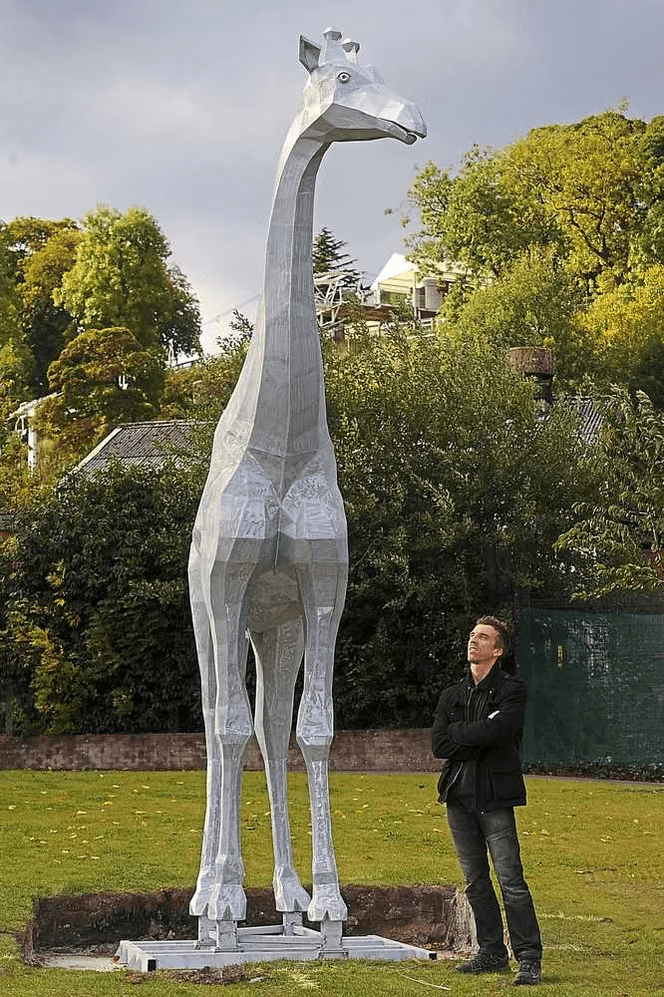
His work shows his love of nature, having sculpted many plants and animals over the years. He works in steel and wood using both modern and traditional techniques to produce his sculptures. His work varies in size from life-size giraffes and salmon to hummingbirds. Tim has created bespoke sculptures for a range of public organisations as well as private commissions both in the UK and overseas, and his smaller sculptures, such as his robins, are available made to order via the online shop.
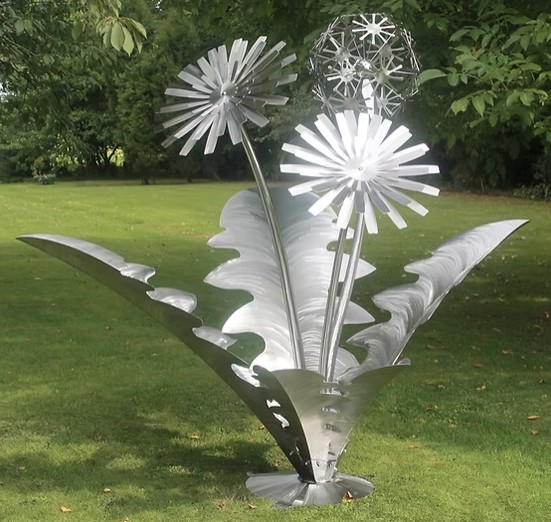
Find out more about Tim’s Steel Art here
 LUXE Serendipity magazine
Leave a comment