By Donna Richardson
Across Guatemala, local artisans and producers are opening their workshops, plantations and communities to visitors, offering authentic, hands-on experiences that celebrate generations of knowledge, craftsmanship and tradition. Whether learning the art of backstrap weaving, discovering the coffee journey from bean to brew, or meeting the makers behind Guatemala’s iconic giant kites, these immersive experiences provide a deeper understanding of the country’s living heritage while directly supporting the communities that continue to preserve it for future generations.
Guatemala’s Weaving Traditions
Across Guatemala, weaving is far more than a traditional craft, it is a living expression of culture, identity and community. From the shores of Lake Atitlán to the weaving villages surrounding Antigua such as Santa María de Jesús, many local families welcome visitors into their workshops to share techniques that have been passed down through generations.
In communities such as San Antonio Aguas Calientes, a town renowned for its rich weaving heritage and textile artistry, visitors can take part in a hands-on experience. Guests gain a deeper understanding of the intricate process of creating textiles, while learning about their historical, cultural and spiritual significance, and the central role they continue to play in everyday life.The experience also offers the rare opportunity to learn about backstrap weaving, one of the oldest and most intricate weaving techniques still practised today, directly from local artisans. By taking part, visitors also support a local children’s weaving school, Chok’ojol Juyú, dedicated to preserving this centuries-old craft for future generations. More than simply a visit to a weaving village, this experience creates meaningful connections with the people who continue to keep Guatemala’s rich textile traditions alive.
From Coffee Plantations to Ancient Cacao Rituals
On the outskirts of Antigua Guatemala, travellers can immerse themselves in the country’s rich coffee culture through an authentic, community led experience with small-scale producers from San Miguel Escobar. Guided by the coffee growers themselves, visitors can walk through the plantations to learn how coffee is cultivated, harvested and processed. Through open and honest conversations with local producers, visitors can hear first-hand about the challenges, successes and aspirations of small-scale coffee farming, offering an insight into the passion, and dedication that continue to shape Guatemala’s renowned coffee industry.
The destination also offers visitors the chance to discover the rich history and cultural significance of cacao – another major export. In Lake Atitlán, travellers can take part in a chocolate workshop at Choco Museo Panajachel, where they are guided through the story of cacao, from ancient Maya rituals and colonial influences to modern-day chocolate production. Along the way, visitors create their own handmade chocolates, personalise them with a selection of toppings, and leave with a delicious souvenir.
Whether it’s the aroma of freshly roasted coffee or the ancient legacy of Maya cacao, these authentic encounters offer a deeper appreciation of the traditions behind two of Guatemala’s most iconic flavours.
Guatemala Through Culinary Traditions
Across Guatemala, community-led cooking experiences invite travellers to discover the country’s rich culinary heritage through traditional recipes and generations of shared knowledge. Around Lake Atitlán, visitors can explore the flavours of Maya cuisine throughimmersive experiences that include vibrant market visits and hands-on cooking workshops celebrating locally sourced produce.
At Casacun’s cooking school, guests learn to prepare authentic Guatemalan dishes while enjoying panoramic views of Volcano Agua, while Ki’Koteemal Kakaw in San Juan La Laguna welcomes visitors to cook alongside Nana Mimi, who shares traditional Tz’utujil recipes and ancestral knowledge of native plants and ingredients. More than simply learning to cook, these intimate experiences bring people together through food and storytelling, creating meaningful connections with the communities that continue to preserve Guatemala’s culinary traditions.
Traditional Festival Preparations
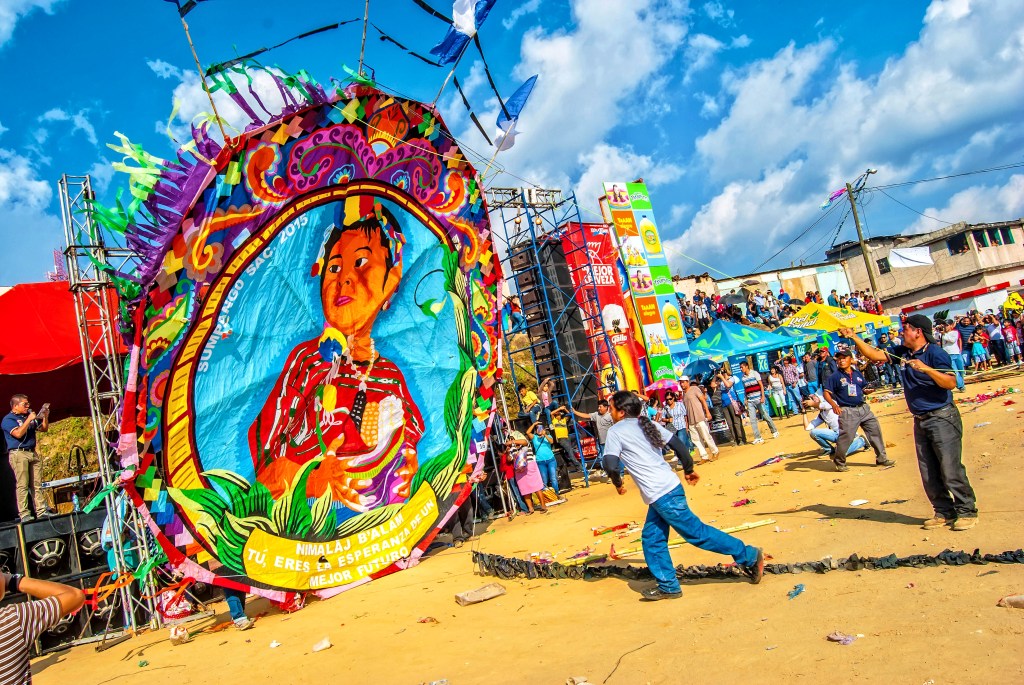
For travellers seeking to experience Guatemala’s living traditions, the weeks leading up to Día de Todos los Santos (All Saints’ Day) on 1st November offer a rare opportunity to witness one of the country’s most spectacular cultural celebrations before it unfolds. In the highland towns of Sumpango and Santiago Sacatepéquez, local artisans dedicate weeks to creating the iconic barriletes gigantes (giant kites), an enduring tradition that honours loved ones and celebrates the connection between the living and the dead. Handcrafted from bamboo, tissue paper and natural fibres, the enormous kites are adorned with intricate designs inspired by Maya heritage, and family stories. Visitors can step inside local workshops to meet the artisans preserving this centuries-old tradition, learn about the symbolism behind each masterpiece and, in some cases, try their hand at traditional kite making before the colourful creations are unveiled during the annual Festival de Barriletes Gigantes in Sumpango.


Leave a comment