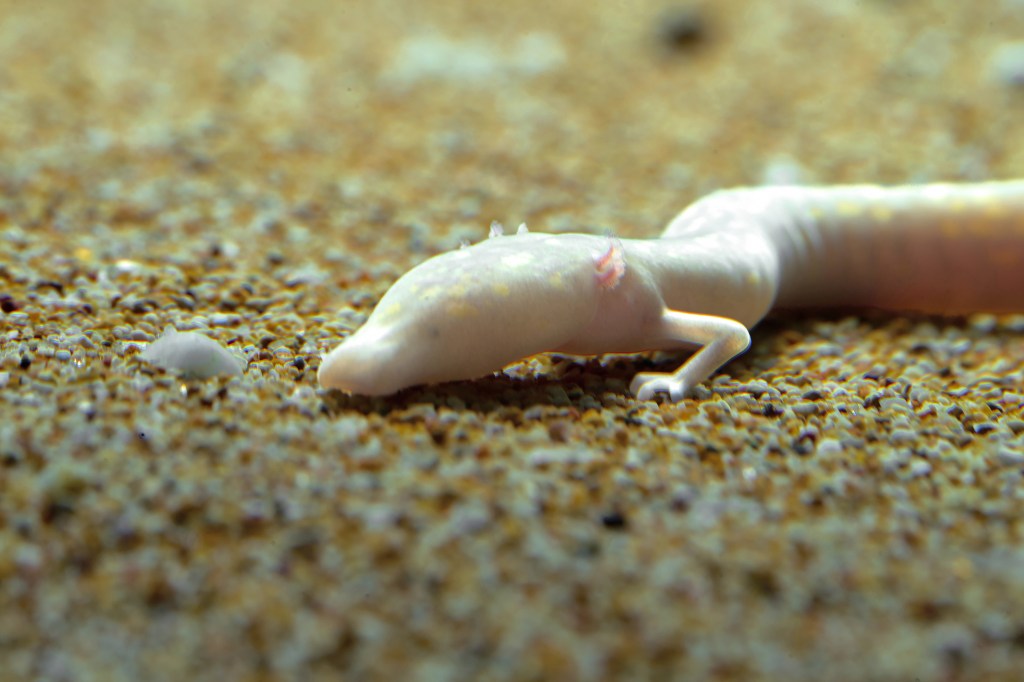
Ten years ago, the world watched in fascination as baby olms hatched at Postojna Cave. The extraordinary event made headlines around the globe, from the BBC, CNN and National Geographic to The New York Times and The Guardian.
This year, the famous “baby dragons” mark their tenth anniversary. A decade of continuous observation and research has given scientists a rare opportunity to better understand their growth, development and biology – research that would be virtually impossible in their natural habitat.
Biologists from Postojna Cave and scientists from the Biotechnical Faculty of the University of Ljubljana have been studying the baby dragons’ growth, health, genetics and hormonal development through non-invasive methods. As the animals approach sexual maturity, their development is opening a new chapter in research into the biology and conservation of this vulnerable species.
The olm’s story is inseparable from the karst environment and its water. Karst systems provide drinking water for more than a billion people, yet pollution on the surface can reach the underground, threatening both the olm and the water reserves on which people depend.
This year, the story of the baby dragons has gained an even broader significance. Just days ago, Postojna Cave hosted the inaugural global celebration of UNESCO’s International Day of Caves and Karst – a day dedicated to raising awareness of the importance of the underground world.
Choosing Postojna Cave, the cradle of modern speleobiology, was deeply symbolic. Here, scientific discovery, the protection of underground life and the importance of karst water come together in one extraordinary story.


Leave a comment