By Donna Richardson
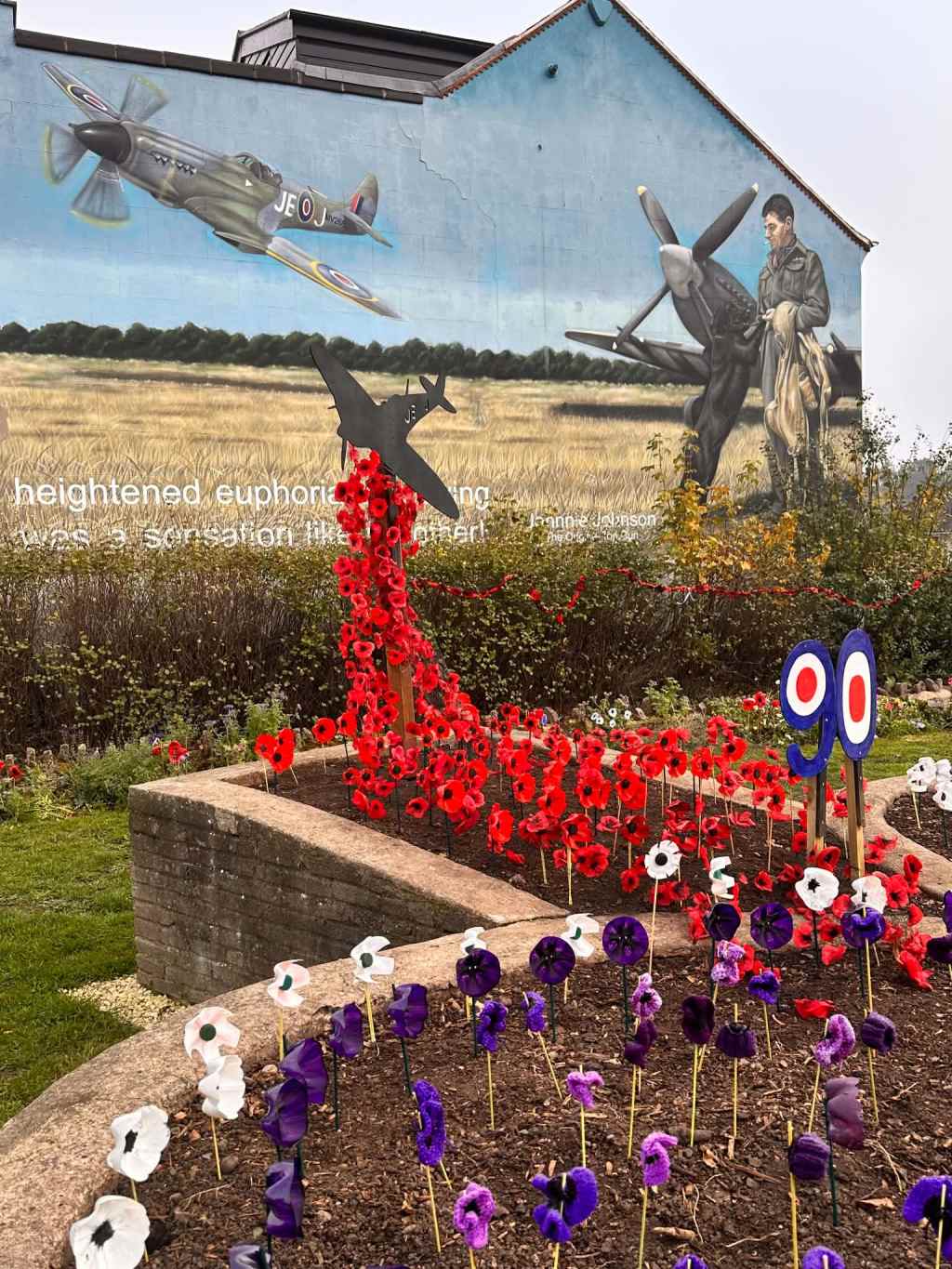
Beneath a striking mural of one of Britain’s greatest Spitfire pilots, a forgotten corner of Loughborough is blooming once more. Inspired by the extraordinary life of local hero Air Vice-Marshal James Edgar “Johnnie” Johnson, a group of dedicated volunteers is bringing new life to Coronation Gardens, creating a lasting tribute to a man whose courage, determination and generosity continue to inspire.
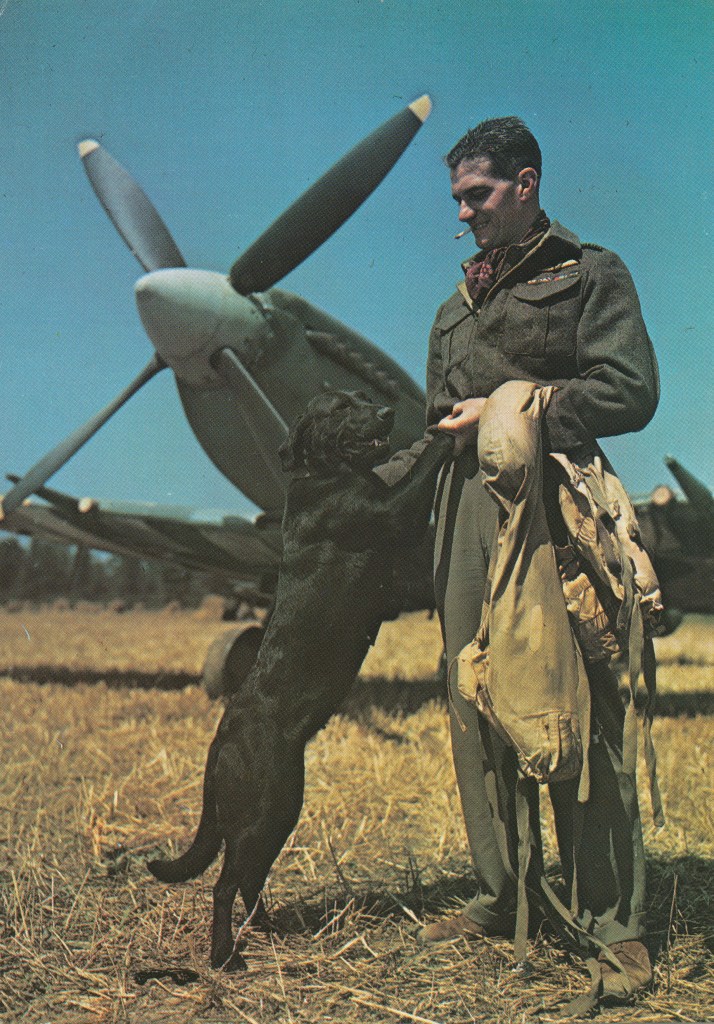
There are some people whose stories deserve never to be forgotten. For Loughborough, one such man is Air Vice-Marshal James Edgar “Johnnie” Johnson, a remarkable son of Leicestershire whose name became synonymous with courage, determination and the extraordinary spirit of Britain’s wartime generation.
With 38 confirmed aerial victories and more than 700 operational sorties to his name, Johnnie Johnson became the leading Allied fighter ace of the Western Front during the Second World War. A distinguished RAF officer, he commanded squadrons and wings, including Canadian squadrons during the Normandy campaign and the D-Day invasion. His outstanding service earned him numerous decorations, including the CB, CBE, Distinguished Service Order and Distinguished Flying Cross.
Born in nearby Barrow-upon-Soar on 9 March 1915, Johnnie’s remarkable journey began in familiar surroundings. Today, more than a century after his birth, his connection with the area is being celebrated in a particularly fitting way.
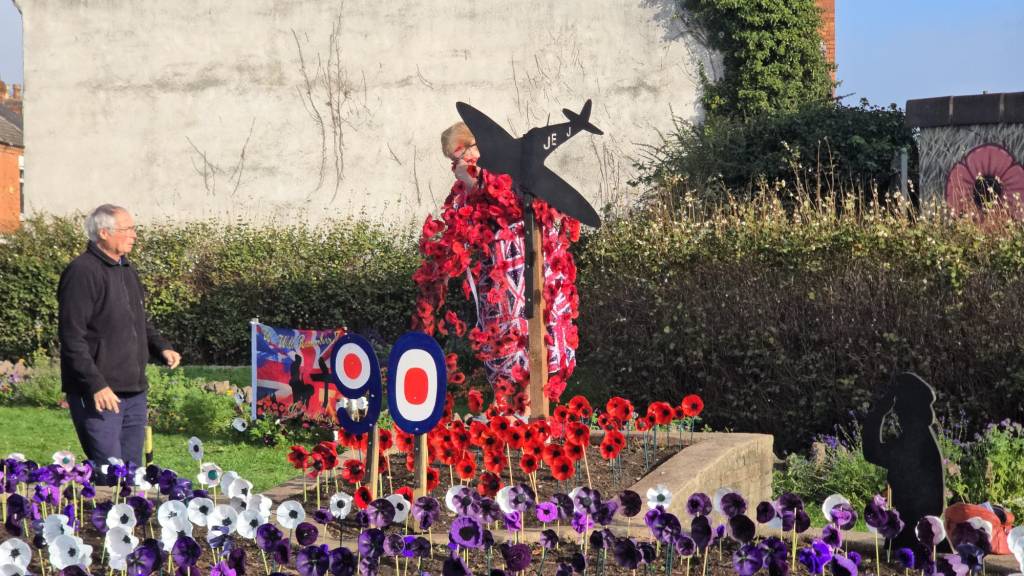
Beneath a magnificent mural depicting Johnnie and his beloved Spitfire, a small group of Loughborough volunteers is breathing life back into Coronation Gardens, transforming an overgrown public space into a place of colour, friendship, remembrance and community pride.
It is a project rooted in nostalgia, local affection and a shared determination to ensure that future generations know the story of a truly remarkable man.
An idea that blossomed
For Ellen Troop, Secretary of the Friends of the 1953 Coronation Gardens, the inspiration came from something she had passed countless times.
Travelling to and from B&Q, she would regularly admire the striking mural celebrating Johnnie Johnson. Yet the small garden beneath it, created to commemorate Queen Elizabeth II’s Diamond Jubilee, had gradually become so overgrown that its distinctive crown-shaped flower bed was almost invisible.
“I was so taken with the mural on the wall that I didn’t even realise there was a crown-shaped flower bed there because it was so overgrown,” Ellen recalls.
With Remembrance Sunday approaching, she began to feel that something needed to be done. The garden deserved to be as uplifting as the story celebrated on the wall above it.
“I thought, ‘We need to have some poppies there.’”
And so, with a simple idea and a little community spirit, something rather special began.
Local residents started knitting and crocheting bright red poppies, gathering over cups of tea and enjoying the companionship that comes from making something together. The handmade flowers were displayed beneath the mural, creating a touching tribute to those who had served and sacrificed.
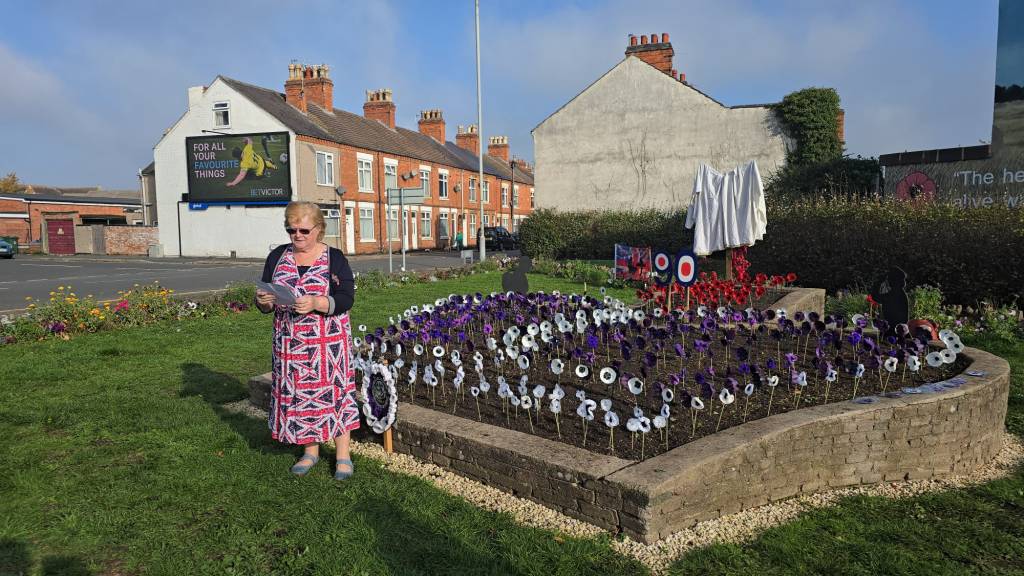
The response was heartwarming. People stopped to admire the poppies, conversations began and memories were shared. What had started as a modest Remembrance gesture soon became the inspiration for something much bigger.
A conversation with Andy Moore of Print Monkey, whose building carries the mural, proved an important turning point. Andy shared more about Johnnie’s extraordinary achievements, prompting Ellen to discover the remarkable story behind the face she had admired so often. And so began a story which inspired a remembrance fittting for a hero.
A community comes together
Back in Coronation Gardens, Ellen’s original idea had begun to gather remarkable momentum.
As Secretary of the Friends of the 1953 Coronation Gardens, she helped bring together a group of enthusiastic volunteers, united by a shared desire to restore the little garden to its former glory.
In less than a fortnight, more than 19 people had joined the effort.
Weeds were cleared, overgrown areas tackled and flower beds brought back to life. Fresh flowers were planted and the neglected space slowly began to reveal its potential.
What had once been an overlooked corner of the town was becoming somewhere people could once again enjoy.
Local businesses and organisations were quick to recognise the value of the project and lend their support. Ever So Local, Morrisons, B&M Stores, Tesco, Print Monkey, idverde, Great Central Railway and Taylor’s Bell Foundry all contributed.
Loughborough in Bloom also provided a Start-Up Grant towards public liability insurance, helping the group establish a sound foundation for its work.
But perhaps the greatest reward has been the response from local people.
Passers-by have stopped to chat, share memories and offer encouragement. Some remember playing in the gardens as children, bringing a wonderful sense of continuity to the project.
Others have shown their appreciation in the most traditional of community-minded ways, bringing biscuits, ice cream, cups of tea and cold drinks for the volunteers.
There is something wonderfully nostalgic about this. In an age when life often seems to move too quickly, the garden has become a place where people can pause, talk, remember and enjoy the simple pleasure of doing something worthwhile together.
Friendships are forming, neighbours are getting to know one another and a forgotten public space is once again becoming part of everyday community life.
Growing a garden for future generations
The ambitions for Coronation Gardens reach well beyond simply restoring its flower beds.
The volunteers hope to introduce more biodiversity planting, build a bug hotel and eventually create an outdoor classroom where children from nearby schools and nurseries can discover the natural world.
Lime Tree Nursery is already involved, with youngsters growing sunflower seeds and learning about the importance of bees, butterflies and other wildlife.
There are also plans being considered to repair the ageing garden wall and ensure that the space remains safe, attractive and welcoming for years to come.
It is particularly fitting that children are becoming part of this new beginning.
Johnnie Johnson’s own story offers a powerful lesson for young people. His schooldays were not always straightforward, and his ambitions were tested by setbacks and injury. Yet he never allowed difficulties to extinguish his determination.
From a young boy in Leicestershire to a decorated RAF officer, his life demonstrates what can be achieved through courage, perseverance and belief in oneself.
Perhaps that is one of the most valuable lessons the garden can offer to the children who visit it.
From Loughborough schoolboy to legendary Spitfire ace
Johnnie Johnson’s story is one of extraordinary determination. He attended Cobden Primary School before moving on to Loughborough Grammar School. A keen sportsman, he enjoyed rugby, athletics and cross-country running. He was also independent-minded and not always inclined to follow the rules, sometimes finding himself at odds with the school authorities.
Eventually expelled, he refused to allow this setback to define him.
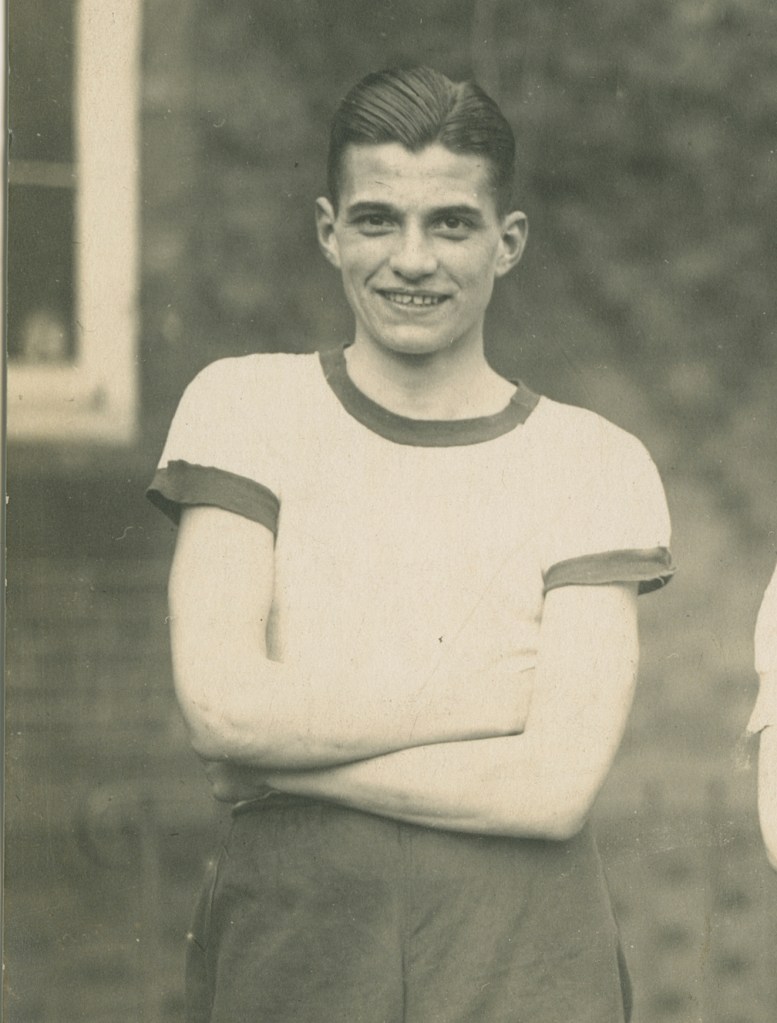
After studying civil engineering at the University of Nottingham, Johnnie joined the RAF Volunteer Reserve, determined to pursue his dream of becoming a pilot. Even a shoulder injury sustained playing rugby threatened to derail his ambition, but he persevered.
It was a determination that would serve him throughout his life.
During the Second World War, he established himself as one of the RAF’s most accomplished fighter pilots. Flying the iconic Supermarine Spitfire, he became a formidable presence in the skies above Europe, displaying exceptional skill, courage and leadership.
His wartime story also brought him into the company of some of the most celebrated names in the RAF. Among them was the legendary Group Captain Sir Douglas Bader, the inspirational fighter pilot who continued to fly despite having lost both legs. Bader and Johnson were prominent figures in RAF fighter command, representing the remarkable determination and fighting spirit of the men who took to the skies during Britain’s darkest hours.
Johnnie’s own reputation as a fighter pilot and leader was firmly established, and his achievements placed him among the outstanding RAF personalities of the war.
His contribution became particularly significant during the Normandy campaign in 1944. Following the D-Day landings on 6 June, he commanded Canadian fighter squadrons, helping provide vital air support for Allied forces as they advanced through France. Flying the Spitfire, he and the men under his command played an important role in protecting Allied troops and challenging the Luftwaffe during one of the most decisive periods of the war.
It was leadership as well as flying skill that distinguished Johnnie. His ability to command, inspire and lead other pilots under the most demanding conditions helped establish his place among the great fighter leaders of the Second World War.
By the end of the war, he had achieved 38 confirmed aerial victories, making him the leading Allied fighter ace of the Western Front.
But the end of hostilities was not the end of his service.
Johnnie continued his RAF career in the post-war years, including service in Korea, eventually retiring in 1966 with the rank of Air Vice-Marshal.
And there was another chapter to his story.
In 1969, he founded what became Johnnie Johnson Housing, an organisation established to provide affordable homes for former Service personnel. It was a reflection of a man whose commitment to helping others extended far beyond his military career.
His achievements brought national recognition, including an appearance on the much-loved television programme This Is Your Life, presented by Eamonn Andrews.
For those who remember the era, such appearances were special television occasions, bringing remarkable lives into family living rooms across the country. Yet for Loughborough, Johnnie was never simply a national hero. He was one of our own.
Keeping memories alive at Loughborough Grammar School
The connection between Johnnie Johnson and Loughborough Grammar School remains an important part of the town’s heritage.
Former headmaster John Weitzel, now the school’s Lead Archivist, has devoted many years to preserving the photographs, documents and personal memorabilia associated with the school’s famous former pupil.
Through his work, John has helped safeguard a fascinating part of local and national history, ensuring that the story of the schoolboy who went on to become one of Britain’s greatest fighter pilots is not lost to time.
His knowledge and enthusiasm provide a wonderful connection between Johnnie’s early years and his extraordinary later achievements.
“Johnnie was a bit of a rebel when he was at school, and he was actually expelled,” John recalls. “But when you look at what he went on to achieve, it makes his story all the more remarkable.”
There is something particularly poignant about that observation. The young boy who sometimes challenged authority would grow into a man whose courage, leadership and determination would earn the admiration of thousands.
The school continues to honour his memory through the Johnnie Johnson Fund, which provides grants to pupils undertaking educational challenges during the summer holidays.
A beautiful stained-glass window depicting his Spitfire provides another permanent reminder of his remarkable achievements.
Thanks to John’s dedication to the archives, the school’s connection with Johnnie remains very much alive. His work also helps give the garden project an important historical dimension, bringing together the memories of a former pupil with the enthusiasm of a new generation of local residents.
A fitting tribute to a local hero
There is something deeply moving about the sight of flowers blooming beneath the image of Johnnie Johnson and his Spitfire.
The mural celebrates the extraordinary achievements of a man who helped shape the course of history. The garden below it celebrates something equally important: the kindness, generosity and community spirit that bring people together.
Ellen’s original suggestion of knitted and crocheted poppies has grown into a project that reaches across generations. Andy Moore helped bring the story behind the mural into sharper focus. John Weitzel continues to preserve the memories of Johnnie’s schooldays and achievements. Local businesses, organisations and residents have all played their part.
Together, they are ensuring that Johnnie Johnson is remembered not simply as a celebrated wartime pilot, but as a local man whose life continues to mean something to the community in which he grew up.
His courage belongs to history, but his legacy belongs to everyone.
For those who remember the wartime generation, the sight of a Spitfire still stirs powerful emotions. It recalls a time of great sacrifice, extraordinary bravery and young men who climbed into the skies knowing the dangers that awaited them.
For younger generations, the garden offers an opportunity to discover those stories, ask questions and understand something of the people who helped secure the freedoms we enjoy today.
And for the volunteers, every flower planted, every weed removed and every friendly conversation is another small contribution to keeping those memories alive.
The garden may be modest in size, but its significance is growing all the time.
Beneath the mural, the poppies have found their place, the flowers are blooming and a once-neglected space is becoming a much-loved part of Loughborough once again.
It is a fitting tribute to a man who rose from a local schoolboy to become one of Britain’s greatest Spitfire pilots, and whose dedication to serving others continued long after he left the RAF.
Johnnie Johnson’s story began here. Thanks to the efforts of Ellen, John, Andy and their fellow volunteers, it will continue to be told here too.
And perhaps that is the loveliest part of all: that a garden created through friendship, generosity and remembrance is helping ensure that the name of a truly remarkable local hero will never be forgotten.


Leave a Reply