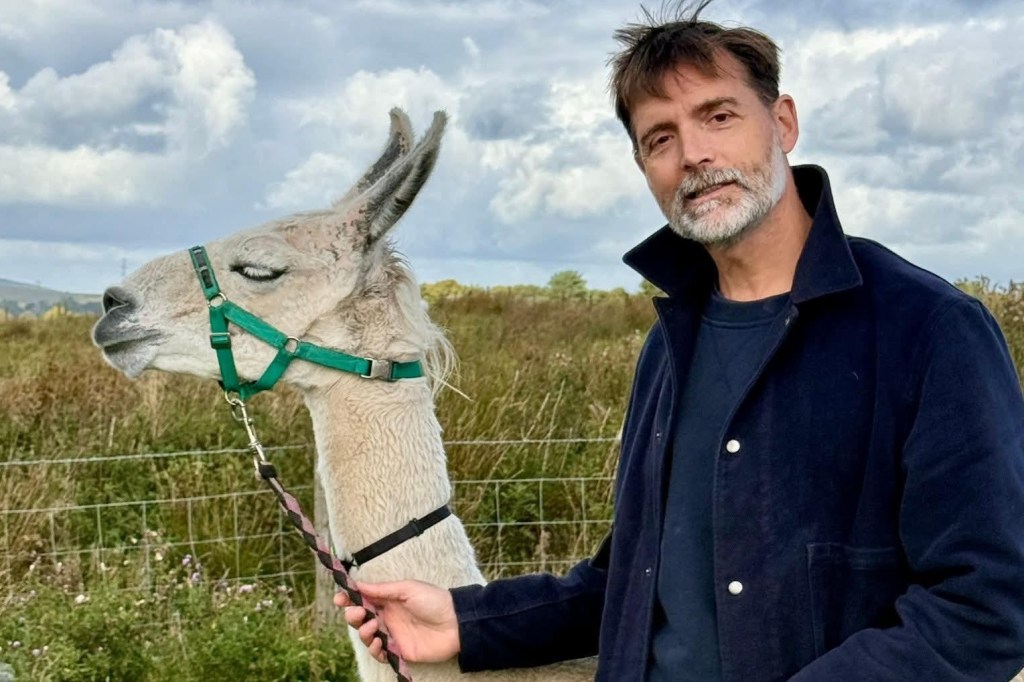
This Second Hand September, we shine a light on sustainable ethical fashion
By Donna Richardson
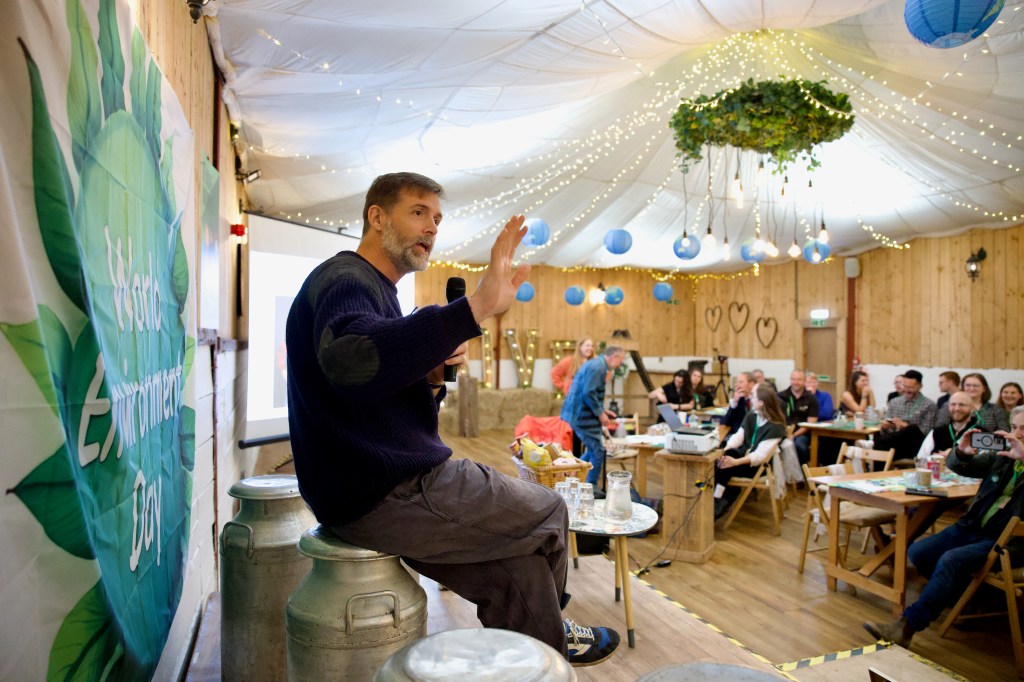
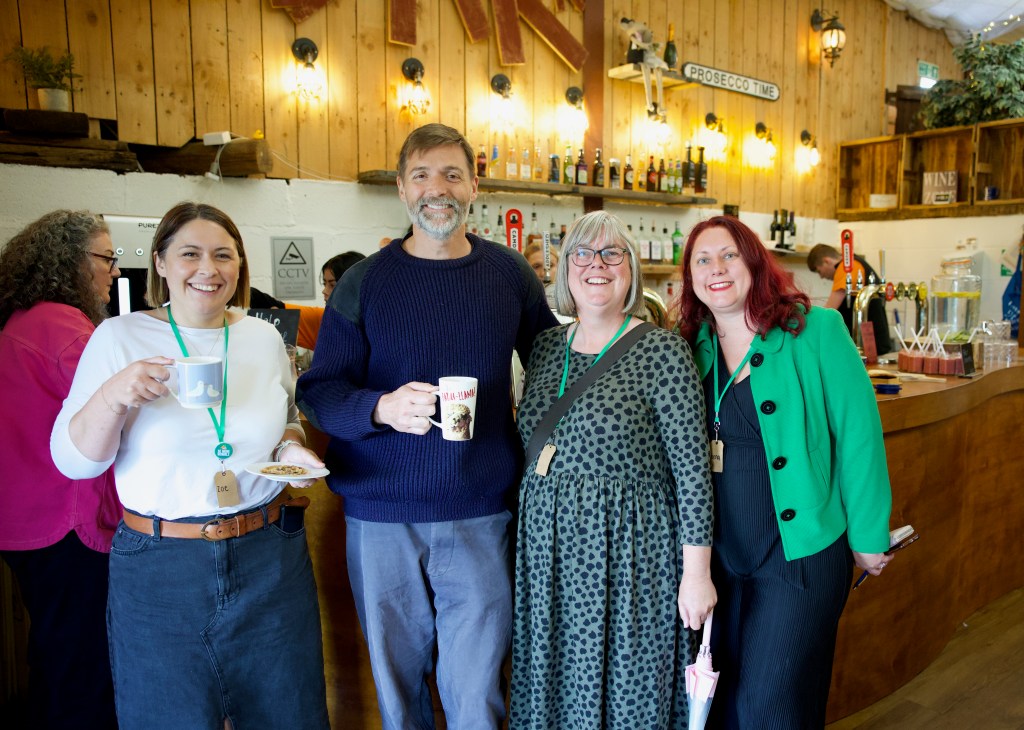
The Great British Sewing Bee judge Patrick Grant, joined a range of sustainability experts at The Wellbeing Farm in Bolton for B-Corp Fest on World Environment Day earlier this summer – and yesterday he was back on the farm for an Away Day, writes Donna Richardson.
The founder of Community Clothing, located in Blackburn, wore trainers from Bolton and trousers and a T-shirt from Blackburn as he spoke out against the rise of fast fashion at B-Corp Fest held at The Wellbeing Farm in June.
He advocates putting purity over profit and operates his business as a force for good after a long career in the industry working for Savile Row tailor Norton & Sons, E. Tautz and Hammond. As well as being a familiar face on the TV, Patrick has worked with some of the world’s best known brands including Cartier, Rolls Royce, Lotus, BMW, Mercedes, The Macallan, Chivas Regal, Barbour, Christian Louboutin, and Alexander McQueen.
After joining as a Designer for Debenhams and now founder of this sustainable and affordable clothing firm, is one of those people. Community Clothing provides ethical and quality clothing that last and garments are spun, woven, dyed, knitted and sewn in factories across England, Scotland and Wales.
Patrick, a proud Scotsman, is now based in Lancashire, having saved Blackburn-based Cookson & Clegg from collapse in 2016.
He explained: “At the end of the first industrial revolution, over 80 per cent of businesses in Lancashire were owned by people who lived here. Surplus profit, went straight back into the loop to help local enterprises and to fund hospitals, schools, almshouses, and colleges.
“The money circulated within the local economy, creating additional opportunities for regional economic growth.
“When I was born in 1972, we bought clothes made in factories in this country.
“Those factories paid business rates, local taxes, and rent. They employed people, who in turn paid insurance and income tax. In essence, all of their profits and the income earned by people were spread around the country.
“Almost all of the money that you spent on your clothes stayed within the local economy; it circulated around. We bought things from the people who made them. That relationship was direct, with positive benefits. The money you spent went to the person you bought off. There was nobody else sifting off a bit of extra cream for themselves.
“Nowadays, when you shop with Shein or Amazon, very little of the money that you’re spending flows back into the UK economy.
“We’ve moved from a time when things we created distributed economic benefits to a system where the financial benefits are limited.
“We have sleepwalked into a situation where our money is no longer doing good in the world. That hasn’t led to any improvements in the quality, The incentive is not to make a good thing, but to encourage people to buy as much as they possibly can. That is all businesses’ raison d’être: to get bigger, sell more and create more profits.
“When I was born in 1972, we bought clothes in shops that were mostly still, at that point, made in factories in this country. We bought things from shops like Marks and Spencer (M&S) who were pretty much in every town. They paid businesses, who paid rates, local people, paid rent and it all flowed back into the local economy.
“We can’t stop high street chains from flogging us even more stuff. As a consumer, you can’t possibly keep up with their mountains of newness.
“It is a very deliberate ploy to keep you locked into this cycle of buying. Does buying make your life better or happier, or wealthier?
“No, none of this is doing you any good. All it is doing is making you anxious and depressed, and it’s deliberate.”
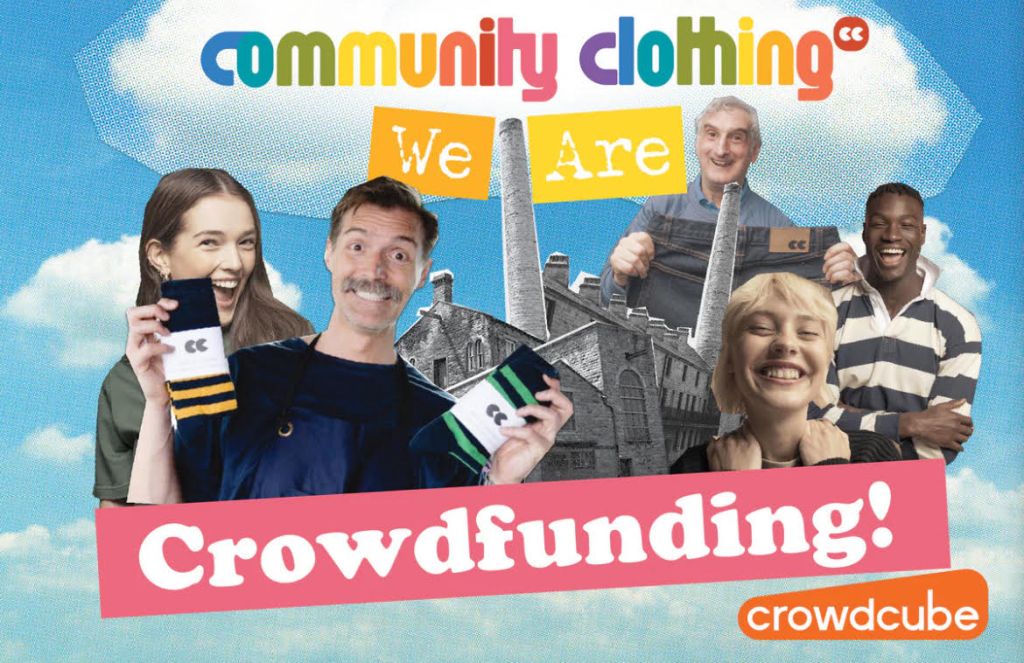
Nine years ago, Patrick started Community Clothing to create a business that gave people a choice. It was born out of a need to buy something that feels good, lasts, and fits nicely, and isn’t made from materials that harm the planet or spend a million years in a landfill when we discard it.
“We realised that around the country, there are brilliant factories that know how to make high-quality clothes.
“The problem with the regular clothing industry model is that you can’t make them in the UK at a price people can afford.
“We wanted to produce good clothes and create decent jobs, and sell them at an affordable price.
“The price was important, making it in the UK was essential, and producing a good product was crucial. How can you make something in the UK that’s expensive and sell it at an affordable price? Well, you have to get rid of all the chunks in the middle, you have to take away all the noses in the trough.
“Most businesses spend more money trying to sell you something **** than they do on making the thing in the first place.
When it comes to marketing, for us, it was pretty simple: why not create something good that people like, and let them feel the quality of it, and let that be enough? Let us return to a model where we create something of value and selling it at a fair price.
“There are four Ps of marketing, one of which is product, and that’s the one most companies in the clothing industry have given up on. I’m pleased to say Community Clothing measures its success primarily by measuring the amount of work we create, so from the very beginning, we track the hours of work we make in the
factories that we work with.
“By last December, we had created just over 450,000 hours of work in the UK. I recall when we reached 10,000 hours of work, I was thrilled. When we got to 100,000 hours, I was over the moon. Now, we’re getting close to half a million, and it proves that it does work.
“Why not create something good that people like, and let them feel the quality of it, and let that be enough? Let us return to a model where we create something of value and selling it at a fair price.”
Patrick Grant
“We have had 100,000 customers in the nine years and we sell stuff made around here, people who buy our stuff like it, genuinely. That is a recipe for success in the modern world. We produce a high-quality product that performs reliably for an extended period. We don’t create a product that you hope somebody will put in the bin in three weeks and replace with something else.
“Our ethos is to make a good product that is going to last in somebody’s wardrobe for 10 years, and then when they get bored of it, they sell it second-hand, giving it another 10 years in somebody else’s wardrobe. We create products that have lasting value and that benefit everybody in the chain.”
Fair wages
Fairness is important to Patrick who ensures that everyone is paid a fair wage too.
“We make sure that the spinner, the weaver, the dyer, the sewer everybody is paid and paid well and that creates value downstream.
“We are different from those companies whose business model is to sell you more stuff this week than they sold you last week.
“Typically, between 10 and 25 per cent of the money you spend goes to those who
made the goods, and the rest is put into other people’s pockets.
“In our model, 65% of every pound you spend goes on manufacturing the goods. Out of £100 would you rather spend £65 on making it or would you rather spend £25 spent on making it and £40 go to a Kardashian.
“Whatever they say about their green agenda, their reason to exist is entirely to encourage you to keep buying their stuff. Because if you stop buying this stuff, they will fail. So they have to keep pushing you to do more.
“Big changes are happening. The rise of second-hand sales is enormous. It’s becoming very fashionable to buy stuff second hand, and that’s a good thing. It’s becoming trendy to turn your back on crap. Why do we replace a good thing that has served it for years, with a piece of garbage which will stop working soon after you buy it.
“Nobody wants second-hand Primark. Right now, there are over 100 million pieces of Zara on sale on Vinted. That’s gone up 5 million in the last couple of months. H&M is nearly at 100 million. We are creating mountains of stuff that nobody wants.
People are considering the resale value of the items they purchase creating long-term value. There will never be a time when the Vivienne Westwood pirate trousers are not going to be snapped up on eBay or Vinted, or the M&S wool jumper made in the 1980s will not get snapped up on Vinted or eBay.
When you make something good, people want to tell you about it and share it, so we receive lots of positive messages, emails, and letters sent to me, as well as on Trustpilot. With a 4.8 score folk really like what we’re doing. We spent 11 per cent of our turnover on all of our sales and marketing activity as a new, growing clothing brand.
“The savings allow us to do all the good things that we do. Good deeds spread by word of mouth. If they’re buying from somebody they care about, they’re likely to buy it for their friends to tell their friends about. Social enterprises and B Corps have a level of commitment from their supporters that is significantly greater than that of traditional businesses. If your business is doing good things, you know people are more likely to support it.
“People are beginning to realise that their cash holds significant power. How do we change this broken system?
“Every single person has the power to do it by just thinking about where they spend their money. Where do you want your money to go? You can spend it in any way you like.
“In the current mode of consumption, we buy loads of stuff that we don’t need. We are filling our wardrobes with junk.
“That doesn’t bring us any happiness. In the world of clothing, 2/3 of what we buy, we never wear anyway, we’re just conned into buying this stuff.
Community Clothing aims to switch off the brain to the 10,000 adverts we hear each time we open our phones, listen to the radio, watch TV.
“We’ve been sold stuff all the time that promises a better life, but the way we feel happy is by living with things that have meaning to us.
When it comes to the food that we buy. I am delighted to spend three times as much money as I can savour it. I think about where it’s come from.
“I caution buy fewer things and have fewer things that have meaning to you. That
way happiness lies.
“We’ve been measuring happiness as a country for 50 years as the more stuff people have and the richer we get and the higher GDP goes, the happiness index doesn’t change at all. In America, it’s gone down.
“It’s about creating an economy that works for everyone. We could have a big thriving economy that sells 10% of the amount of physical stuff we just you know just charged 10 times more but the money do loads of good. It begins with less but better, rather than a large volume of garbage. We work with makers in Sheffield who take old festival tents and create bags and waterproof jackets.
“It’s all about the world saying it’s cool to wear a pair of trainers made from recycled plastic bottles. Fashion is a positive move forward, all of that work. Made in Glasgow, made in Sheffield, made in Leeds – we are all about local products.”
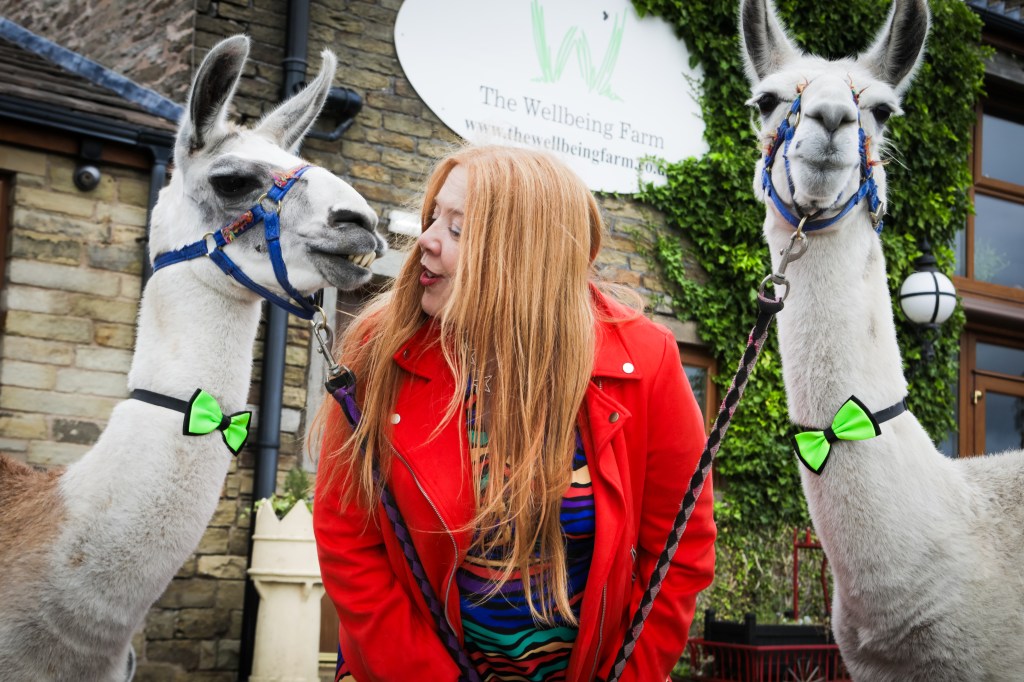
Similarly, The Wellbeing Farm, one of the first B-Corp certified Wedding Event venues in the country, prioritising conscious events. From B-Corp Fest to conscious weddings, its leader Celia Gaze is a strong voice in the sustainability sector. She is about to host a TedxTalk in Scarisbrick this weekend and she and the farm are leading the way when it comes to sustainability.
Celia is a purpose-driven entrepreneur and founder of one of the UK’s first B Corp certified event venues. After burning out in a senior NHS role, she transformed a neglected farm into a thriving hub for conscious, meaningful celebrations. Through her work, she challenges the commercialized norms of weddings, parties, and even funerals—offering a fresh approach rooted in sustainability, inclusivity, and intention. Celia inspires people to rethink traditions: Are we celebrating from the heart, or just following empty customs? By breaking away from outdated expectations, she believes we can create deeper connections and leave a lasting legacy. She’s also the founder of Conscious Day, a global movement calling for realignment with what truly matters. Is it time for a Conscious Revolution?
For Patrick, being back at the farm again was a breath of fresh air. It provided creative space for him to work away on new ideas. Watch this space.


Leave a Reply