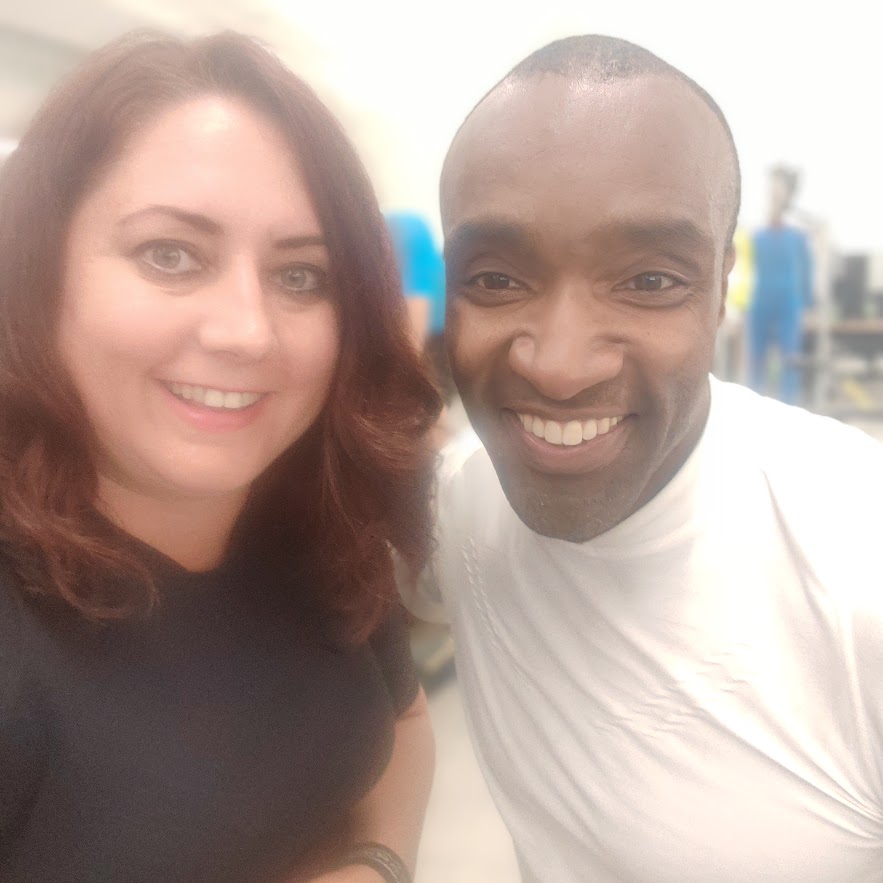
By Donna Richardson
In the late 1980s, a group of teenagers in France began turning city streets, staircases, and rooftops into their playground. They ran, climbed, jumped, and rolled -not for competition or recognition, but for the sheer joy of movement and discovery. One of those teenagers was Sebastien Foucan, now 51, whose passion for exploring his environment would eventually launch parkour into the global spotlight. Years later, millions around the world witnessed Foucan’s breathtaking skills on the silver screen, as he sprinted, vaulted, and leapt his way through the iconic opening chase of James Bond’s Casino Royale. Yet few realised the deep philosophy and personal journey behind those stunts – a story rooted in self-belief, creativity, and the reclaiming of space.
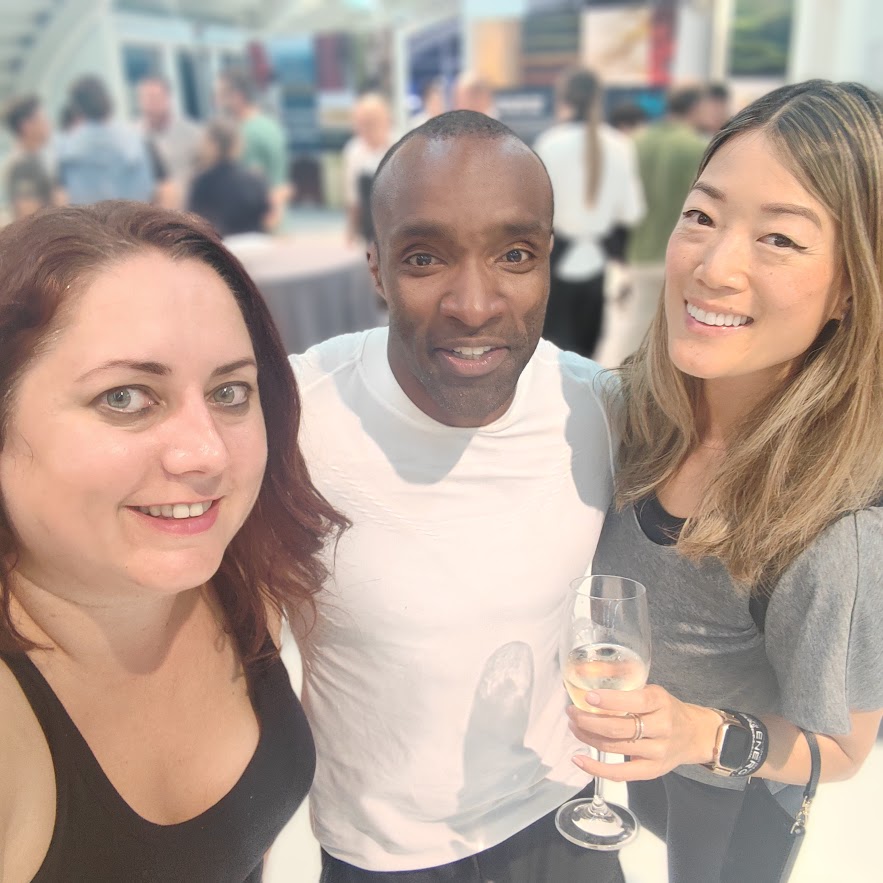
“We just had the desire to play outside,” Foucan recalls of his early days when I met him at UYN in a factory in Asola close to Lake Garda. “It was about creating our own adventure, exploring our environment. Fast forward, and people started noticing -what we now call parkour.”
What began as youthful curiosity became a worldwide movement. To outsiders, parkour looks like urban spectacle – leaping between buildings, vaulting railings, scaling walls. But as Foucan emphasises, “Climbing buildings is the flashy thing. The reality is much more natural. You use your environment as a tool to explore and develop yourself. Climbing, jumping, swinging, balancing, rolling- that’s what we really do.”
From Paris Streets to the Big Screen
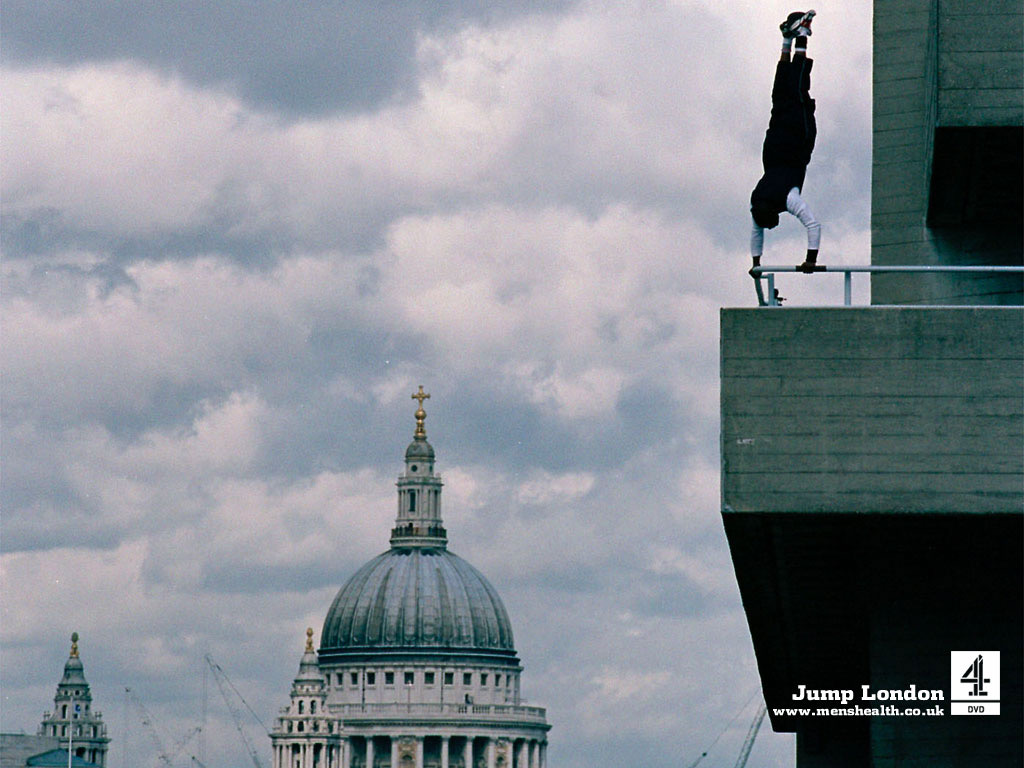
Foucan’s journey from suburban Paris to global fame is a testament to the power of passion and persistence. “When I was 15, it was just pure passion,” he says. “We practised for years. There was no audience, no internet, no videos. We just loved being active outside.” Eventually, someone in their group suggested recording their movements for television, and Jump London launched in 2003, showcasing Sebastien and his friends freerunning across London’s landmark buildings, rooftop to rooftop, and their careers really took off. “Once it aired, things began to move. We formed a group, and opportunities followed,” said Sebastien.
“Parkour is about clearing all obstacles in your path and the turning point arrived with the internet. “Recognition came from the power of the web,” Foucan recalls. But the ultimate test came when he was selected for Casino Royale.”
The James Bond film’s opening chase, featuring Foucan as the agile bomb-maker, was a defining moment both for parkour and for Foucan himself. “This is the twentieth anniversary year of Casino Royale, and for me, the chase scene was a milestone,” he reflects. “You work with a stunt team—planning, choreography, safety, everything. I worked directly with Daniel Craig for the chase and fighting sequences. I had to tell them what I was capable of, what I wanted to do. We trained for three months on that crane scene – 200 feet high! CGI was minimal. Most of what you see is real.”
He describes the intense preparation, the collaboration, and the responsibility: “You have to make sure everyone is on the same page and working together. Safety is everything. Any mistake, and it’s not just you at risk. Working with Daniel Craig was fantastic. He’s professional, focused, and willing to learn. There’s a lot of mutual respect.”
Movement Beyond Stunts: Working with Madonna
Foucan’s talents soon found their way into the music world, most notably in collaboration with Madonna. “Working with Madonna is the top -you’re working with a consummate professional, a superstar with a strong work ethic who’s also very straightforward,” he says. “If you do well, she’ll tell you. If not, she’ll tell you that too. There’s no going sideways with her. If she trusts you, she gives you responsibility. The weight on your shoulders is big, but nothing compared to hers. Any mistake, and she’s in the newspapers.”
After achieving international recognition, Foucan made a pivotal decision: he left Paris for London in search of new opportunities. “I realised quickly London was the place for me,” he says. “Paris is beautiful, but it’s more about art and culture. The French mindset isn’t set up for parkour and entrepreneurship. London was different—open, full of possibility. That’s where I began working with Madonna, incorporating parkour-inspired movement into her performances. Whether it’s film, music, or stage, it’s about translating the freedom of movement into new spaces.”
A Philosophy Rooted in Play
Foucan is adamant that parkour’s appeal isn’t limited to daredevils or elite athletes. Its roots are universal. “Children explore their environment instinctively; parkour is simply adults reclaiming that way of interacting with the world,” he says. “All this comes from the same idea: exploring your environment, following your imagination, pushing your limits, and learning from it.”
He speaks with conviction about the parallels between childhood development and parkour: “You can see it clearly in children: when they’re young, they naturally explore their environment. They move according to their imagination and desire, copying us as parents. That’s how they learn to stand, walk, run, and step forward—by imitation. Parkour is exactly that. Everything else people see is often just flashy, but in reality, parkour is very natural.”
The Sebastien Foucan Academy: Movement as Growth
Now based in London, Foucan founded the Foucan Academy, where children and teenagers discover movement as play, challenge, and self-expression. The academy’s approach is holistic: running, vaulting, climbing, swinging, all in a supportive community. “We try to make them grow, plant the seed, and help them understand their own curiosity and abilities. Society influences you as you grow, but you can still do anything—not just in terms of performance, but in terms of living actively.”
For Foucan, the benefits go far beyond fitness. “Beyond being a complete body workout, parkour helps improve essential skills like speed, agility, endurance, coordination, balance, and core strength. Even more importantly, it fosters confidence, resilience, teamwork, and problem-solving skills that benefit children for life. We see kids come out of their shells. We teach them to channel their creativity and ability and just move.”
He encourages everyone, regardless of age or ability, to rediscover playful movement. “If you start by thinking you’re unfit, you’ll never progress. But if you start moving, you get better. Don’t ask how long you’ll walk, just get your stuff and go walking. Just do it.”
The Science and Psychology of Movement
Modern research is beginning to validate what practitioners have long known: activities that require complex movement and spatial awareness, such as parkour, can enhance motor learning, proprioception, and even cognitive flexibility. “Parkour engages a complex network of physical and neurological systems—balance, strength, spatial awareness, reaction time—all in rapidly changing environments,” Foucan explains.
Unlike repetitive exercises, parkour is dynamic and unpredictable, requiring constant problem-solving. “You solve problems with your body,” Foucan says. “Some people can’t express themselves with words, but they can with movement.”
He believes that movement and thinking are inseparable. “Physical actions influence perception, emotion, and decision-making. Each jump, each hesitation overcome, reshapes how the brain interprets possibility. You do something once, it works. You do it again, it works again. That’s how belief grows.”
Belief: The Foundation of Parkour and Life
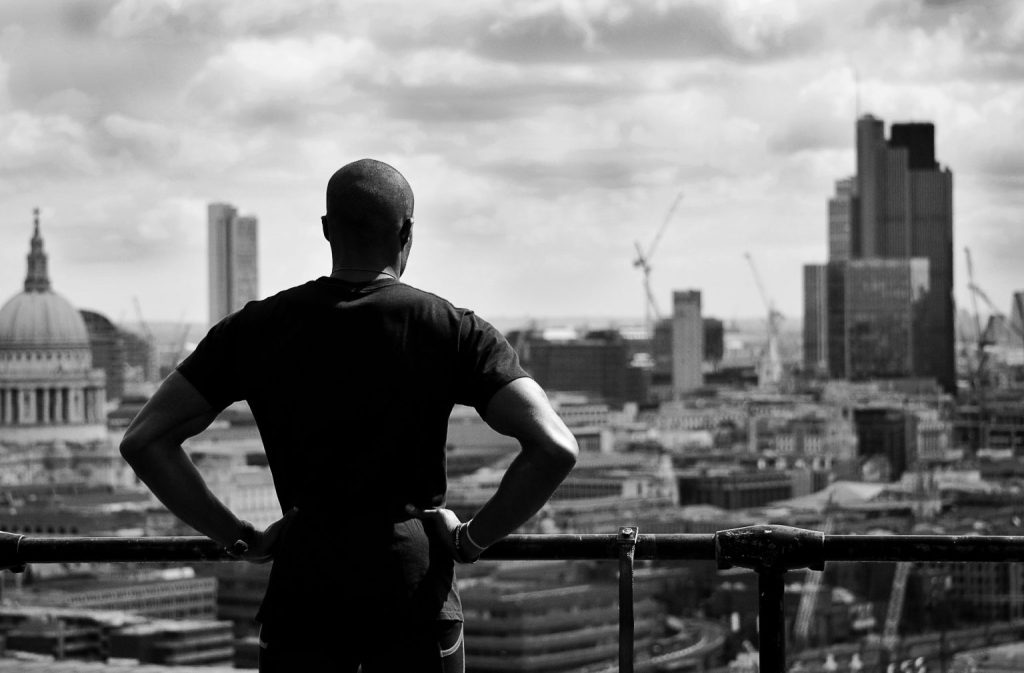
For Foucan, belief is the foundation of everything. “Technique matters, of course, but before any of that, people need belief. Without it, nothing starts.”
He explains that self-efficacy, the confidence that one can act effectively – shapes motivation, resilience, and performance. “From when we’re young, what we’re told stays with us,” he says. “Those messages become part of how we see ourselves.”
Creating the right environment is key. “It’s like a plant,” he says. “You can’t expect it to grow in bad soil.” The academy is designed to be a safe, supportive, judgment-free space where children and adults alike can challenge themselves productively. “Even small environmental changes can have an effect. If everything around you is in disorder, it affects how you feel. When you put things in order, you remove a burden.”
He’s also keenly aware of social influences. “Words are vibration – they affect you. If your social circle is negative, it’s a waste of time. Find your tribe -people who like to be active and play.”
And the hardest battle? The one inside. “At some point, you need to look at yourself and say: I can do it. Even if everything is against you. Sometimes you have to ‘lie’ to yourself, because the negative voice is lying anyway. It’s a daily exercise. Not once—every day.”
Legacy and the Future
Nearly two decades after parkour’s mainstream debut, Foucan is preparing to release a documentary, The Art of the Jump, exploring his life, philosophy, and the discipline’s evolution. He remains independent, declining to affiliate with governing bodies or major brands. “I do what I believe is important for the next generation,” he says.
He’s seen parkour evolve from a clandestine playground game to a global movement, and has watched as social media and competition have sometimes shifted its focus from philosophy to performance. “That’s what happens when something becomes popular,” he says. “Some people get the message. Some don’t.”
But he’s optimistic about the future, so long as the core remains: “Parkour is about reclaiming your space, using your skills, following your imagination, and developing yourself. That’s the real philosophy,” he told me in the car on the way back to the airport.
Belief isn’t built in a day, Foucan reminds his students. “It builds slowly, with every experience -each jump, each hesitation overcome. And once it’s there, it changes everything.”
 LUXE Serendipity magazine
Leave a comment