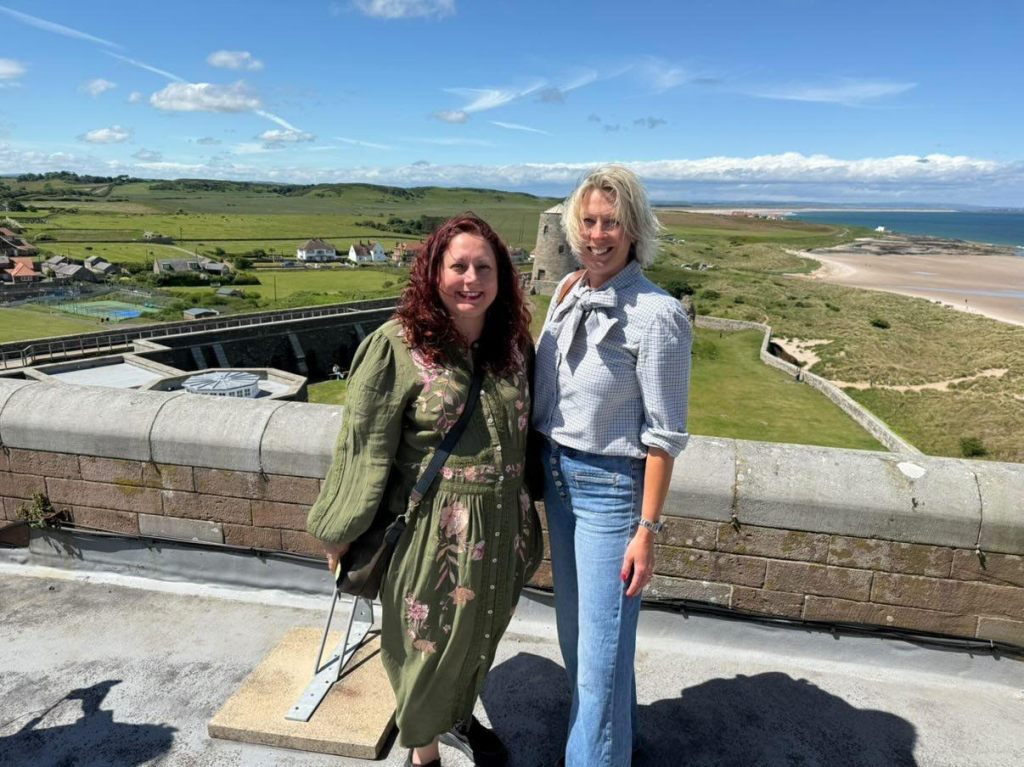
By Donna Richardson
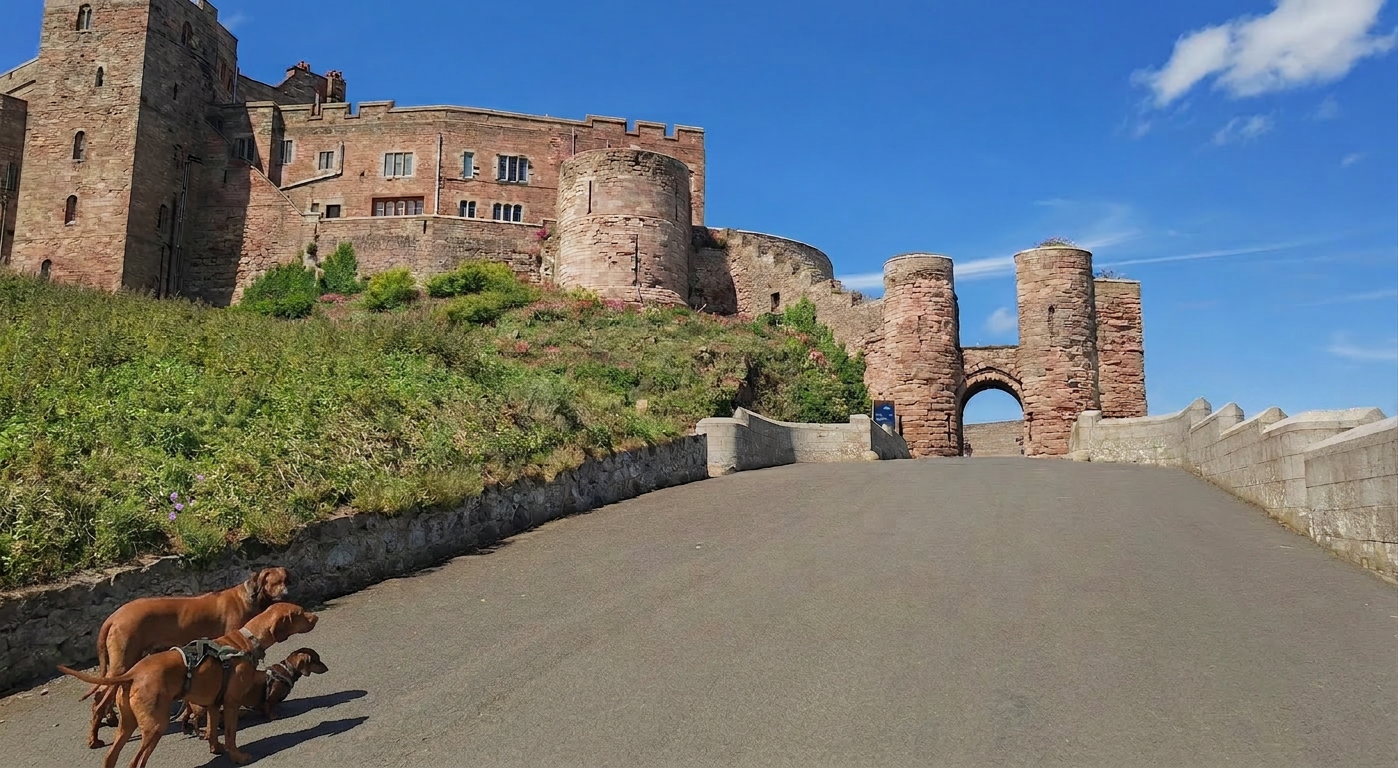
High above the Northumberland coast, where the North Sea rolls in and miles of sand stretch beneath vast skies, Bamburgh Castle rises like something half-real, half-legend. For over 1,400 years it has stood watch over this dramatic shoreline- an Anglo-Saxon stronghold, a medieval fortress, a Victorian restoration, a film location, and today one of Britain’s most iconic castles open to the public.

But while visitors come for the views and history, the story now being told at Bamburgh is shaped by Claire Watson Armstrong -its chatelaine, who helps interpret, manage, and share its living heritage.
“It’s easy to think of castles as frozen in time,” she says. “But homes are about people. They’re about memories and traditions and creating new stories.”
A journalist turned storyteller of a castle
Before Bamburgh, Claire worked in journalism and later PR -shaping stories, writing, and working in fast-moving media environments, something she continues to do today.
“My background is journalism,” she says. “I still love writing. I still love telling stories,” she told me, as we stood on the battlements. That instinct now runs through everything she does at the castle.
“It’s something I’m really passionate about,” she added. “Telling the story of the castle and making sure people understand it’s not just a monument – it’s a living place.”
A meeting on the estate
Her connection to Bamburgh began in the landscape surrounding the castle rather than within its walls. She first met Francis Watson Armstrong while horse riding across the estate.
“I was riding around one of his fields on a horse, and I spotted him,” she recalls.
After time working and travelling in Australia, Claire returned to find Francis still rooted in the same place where they had first met.
And this time, he asked her out.
“He was still there waiting,” she says. “And that was really how it began.”
A castle wedding in extraordinary times
Claire and Francis married during lockdown inside Bamburgh Castle, and it was like a fairytale come true.
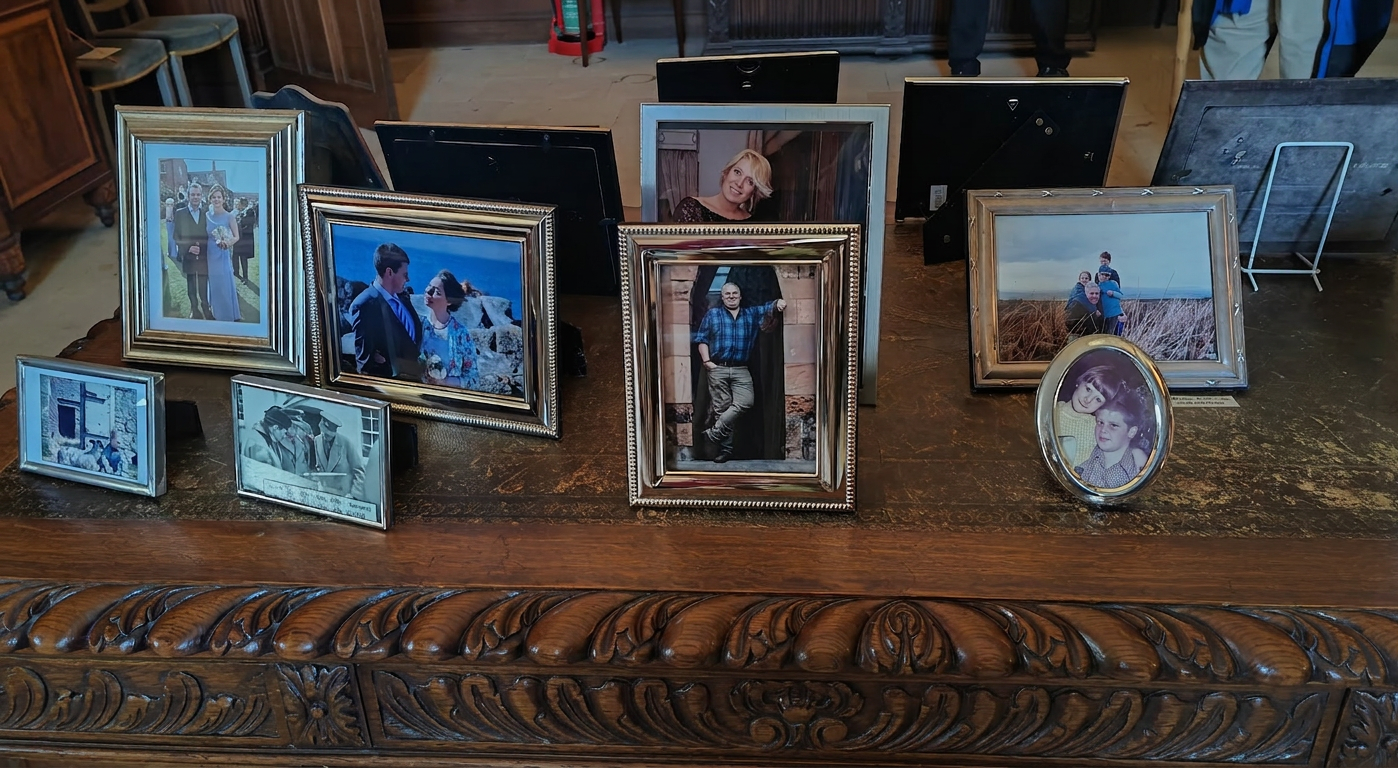
“We got married in lockdown, actually in the castle,” she says. “It was just our family and friends, and it was very special.”
The ceremony took place in the Cross Hall within the King’s Hall -an extraordinary space of height, stone, and centuries of memory.
“It felt very personal,” Claire reflects. “Very quiet, very still. Like the castle was holding the moment for us.”
A castle shaped by family history
Francis’s connection to Bamburgh runs deep. He once lived inside the castle as a child, growing up among its corridors and vast stone rooms, where everyday life and extraordinary history overlapped completely.
“It was a fantastic place to grow up,” Claire says. “Every corridor was an adventure, and he used to tear around the palace and its grounds with a little gang of friends; what a place to grow up.”
One of those corridors, the long Shooting Gallery, still carries traces of that upbringing.
“You can still see marks in the walls and floor from where he practised target shooting as a boy,” she explains.
During the filming of an Indiana Jones movie at Bamburgh Castle, a remarkable story came to light involving a portrait of Charles I that had been discovered with a small hole in it. Francis Watson-Armstrong later admitted that the damage had happened when he was younger, growing up in the castle. His wife, Claire Watson-Armstrong, explained that the castle had always been their family home, so Francis had been surrounded by its historic artefacts throughout his childhood. Rather than treating the painting as a distant museum piece, it was simply part of daily life, which is how the accident occurred. The moment became a memorable anecdote from the castle’s recent history, highlighting how Bamburgh is both a major heritage site and a lived-in family residence.
Lord Armstrong and the making of modern Bamburgh
The castle as it is seen today owes much to William Armstrong, 1st Baron Armstrong -a Victorian engineer, inventor, and industrialist who is credited with some of the world’s most modern inventions. He transformed Bamburgh from a ruin into the romantic fortress visitors recognise now.
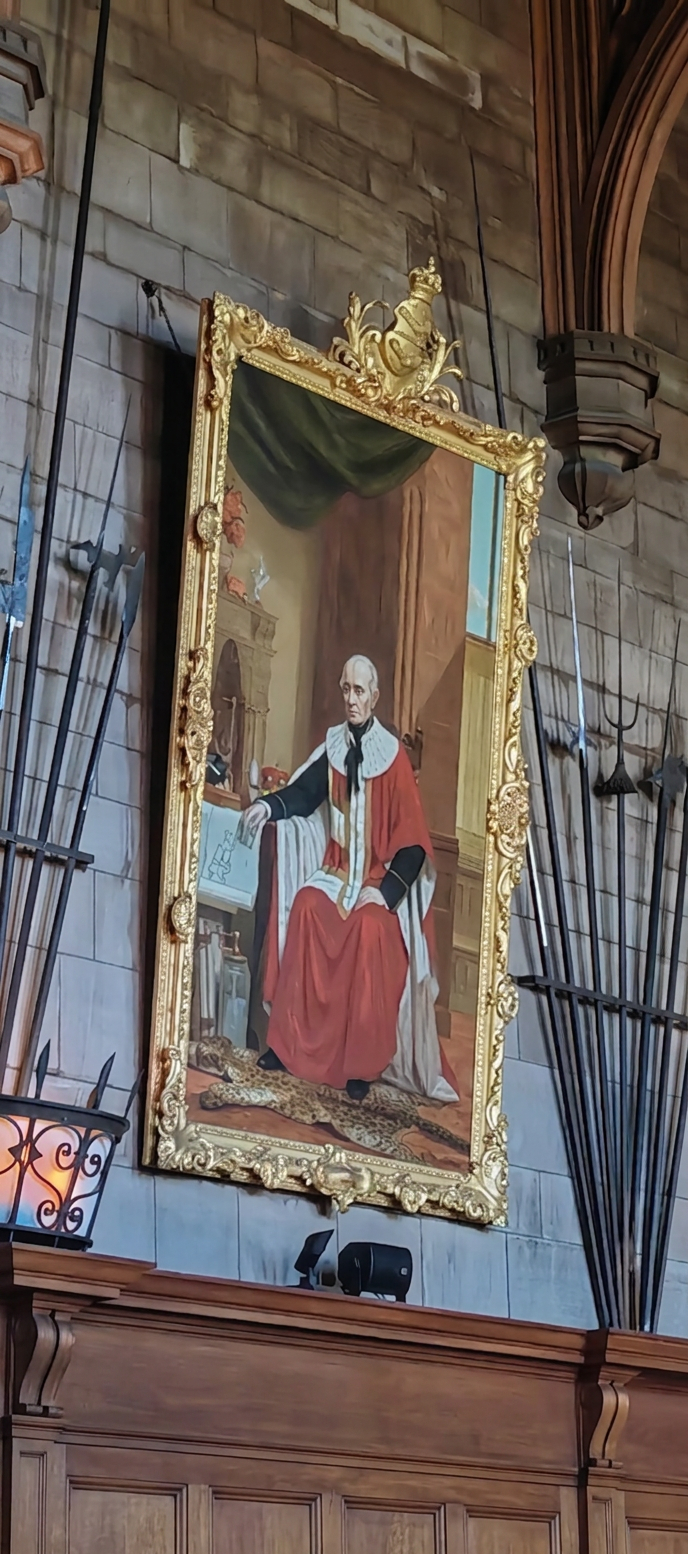
Armstrong, born in Newcastle in 1810, made his fortune through engineering and armaments, founding what became Armstrong Whitworth. He was a towering figure of Victorian industry and innovation, and his restoration of Bamburgh in the late 19th century combined cutting-edge engineering with a deep respect for medieval architecture. He rebuilt the castle as a grand residence while preserving its fortress character, shaping much of its present form.
Francis Watson Armstrong is a direct descendant of Lord Armstrong, and the family connection remains central to the castle’s identity today. The restoration begun by his ancestor is the foundation of the home and heritage that Francis himself grew up within.
“You’re very aware of that legacy,” Claire reflects. “It’s not just history – it’s something that still shapes everything here.”
A castle open to the world
Today, Bamburgh is fully open to visitors, welcoming thousands each year to explore its rooms, ramparts, and exhibitions. Yet behind that public experience is a working conservation site and a family estate with deep historical roots. But it’s also very much a homely place with the generations of many who lived here having an imprint on the castle. Francis lived here as a child and used to play in the halls, although the couple live away from the castle.
Claire’s role sits within that balance -between access, preservation, and storytelling.
“There are school runs, shopping lists and everyday routines, just like anyone else,” she says. “But at the same time you’re working with something that has 1,400 years of history behind it.”
Christmas at Bamburgh
One of the most atmospheric times at the castle is Christmas, when its historic rooms are transformed through immersive installations created with specialist creative teams, including designer Charlotte Lloyd Webber.
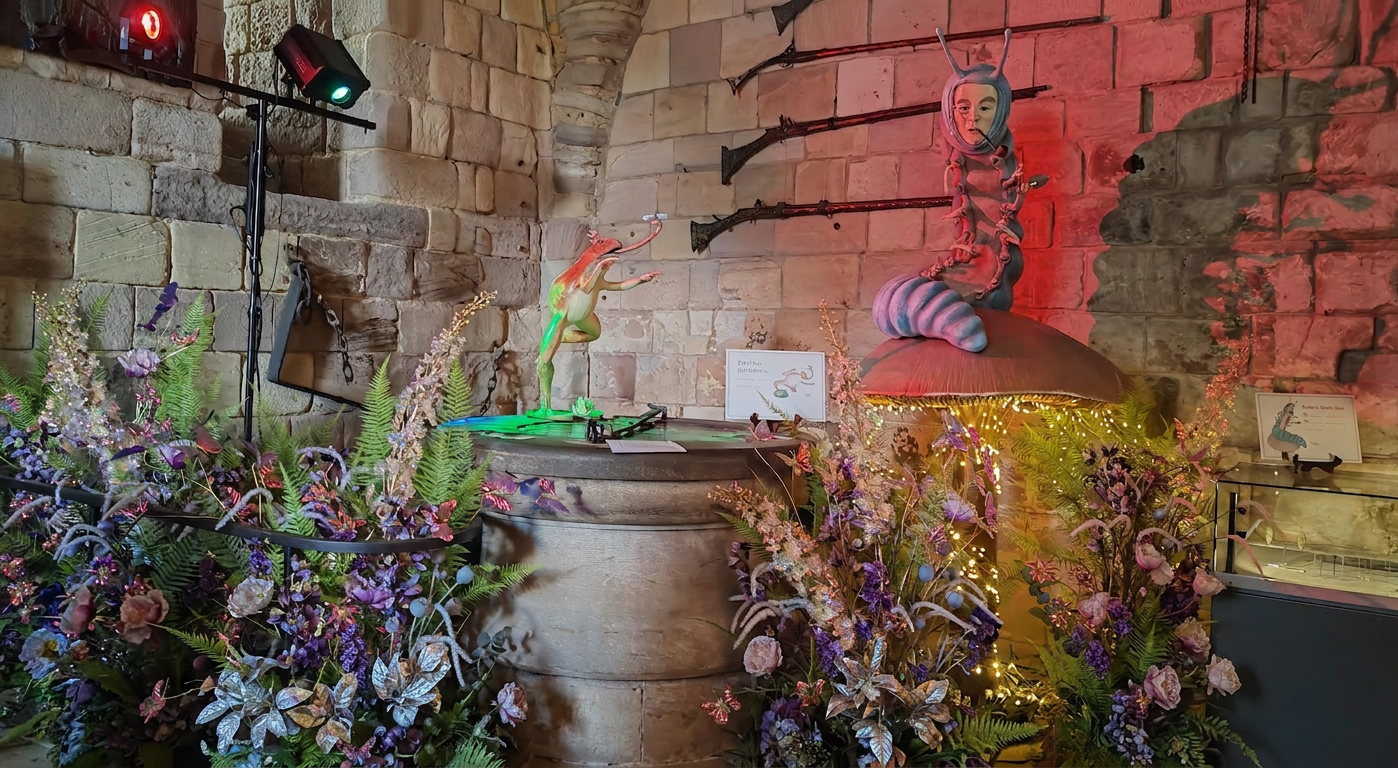
“It’s absolutely fantastic,” Claire says. “We transform the castle with different themed installations. Each year there’s a new idea running through the rooms.”
Past themes have included fairy-tale-inspired Treasure Tales, a festive pirate adventure, and more traditional seasonal storytelling, such as A Christmas Carousel, which reimagines the castle as a theatrical journey through its rooms.
“Each installation takes over different spaces,” she explains. “And it completely changes how you experience the castle.”
For Claire, it is one of the moments when Bamburgh feels most alive with imagination layered over history.
Conservation in action
Alongside public events, major conservation work is constantly underway. One of the most significant current projects is the reroofing of a large section of the castle above the King’s Hall.
“It’s a huge project,” Claire says. “We’re talking about something the size of two tennis courts that needs to be carefully removed and replaced.”
The works require specialist scaffolding engineered for the castle’s dramatic cliff-top position.
“It’s a once-in-a-generation moment,” she explains. “The roof hasn’t been replaced since the Victorian restoration in the 19th century.”
Rather than closing the castle, the project is being used to show conservation in action.
“The danger is people think it’s shut,” she says. “But actually it’s even more of a reason to visit. You’re seeing history being cared for in real time.”
Standing on the battlements
For Claire, one of the most powerful experiences is standing on the castle walls looking out across sea and sky.
“Standing on the battlements and looking out to sea… it’s just incredible,” she says.
“You just feel completely surrounded by history,” she adds. “You realise how many people have stood there before you.”
Ghosts, legends, and atmosphere
Like many ancient castles, Bamburgh carries folklore—stories of unexplained figures, strange sounds, and the lingering sense of presence that visitors often report.
Claire treats it with warmth rather than certainty.
“There’s been life and death here for thousands of years,” she says. “So of course it has stories attached to it.”
And even in quiet moments, she admits, the atmosphere is unmistakable.
“Even when it’s quiet,” she says, “it never feels empty.”
A life told through place
For Claire, Bamburgh is not a private home, but a public heritage site she helps bring to life through storytelling, events, and interpretation.
“I still love telling stories,” she says. “And this place gives you an endless supply of them.”
It is a life shaped by history and landscape -where Francis’s family legacy reaches back to Lord Armstrong’s Victorian transformation of the castle, and where Claire now helps ensure its story continues to be told for everyone who walks through its gates.
 LUXE Serendipity magazine
Leave a comment