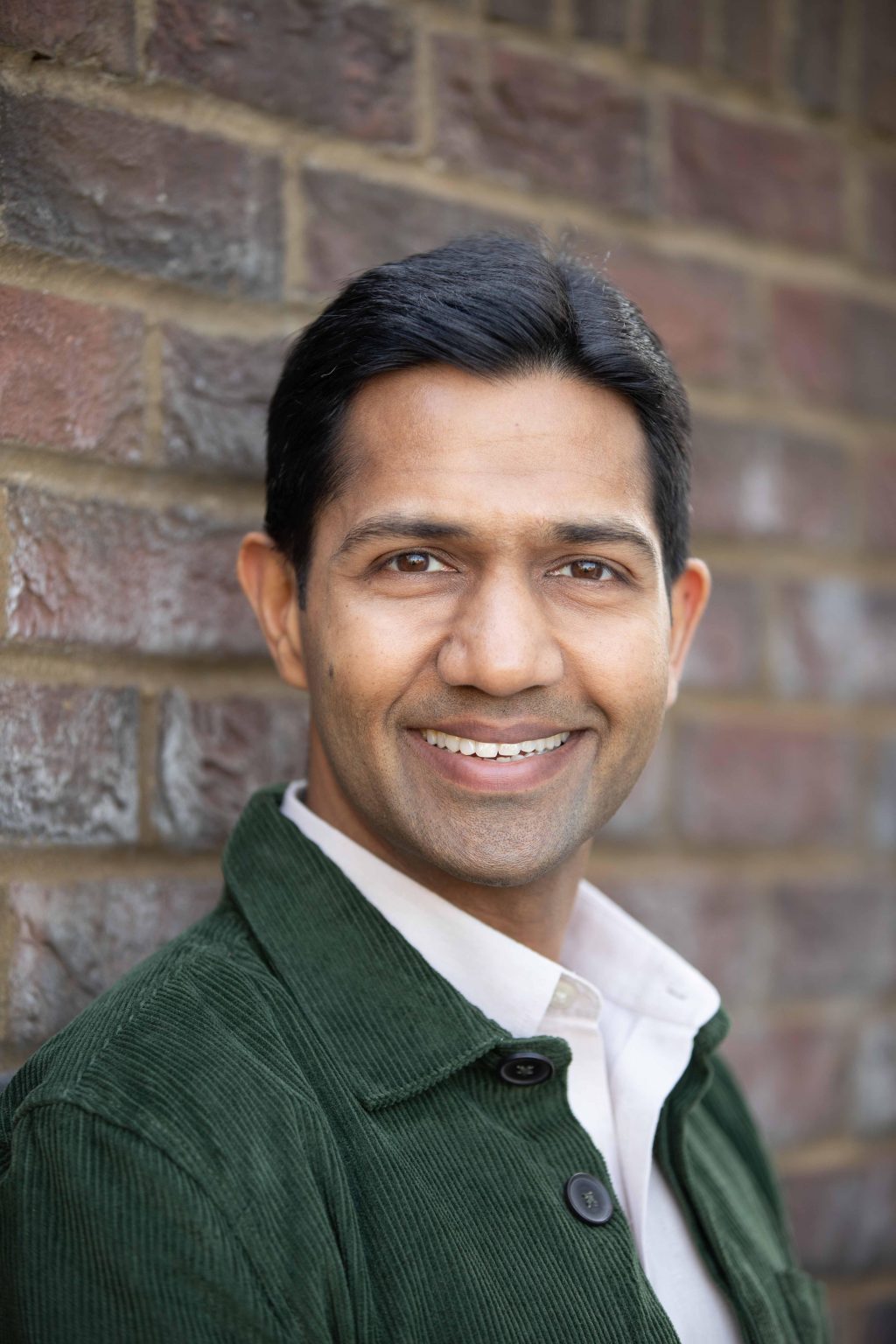
By Donna Richardson
Donna Richardson met Masterchef finalist Anurag Aggarwal at the Shaftesbury Food Festival
The former finance professional swapped the corporate world for a life driven by food, creativity and a desire to give something back. Now he is bringing those passions together with the launch of SEASONS @ St Luke’s.
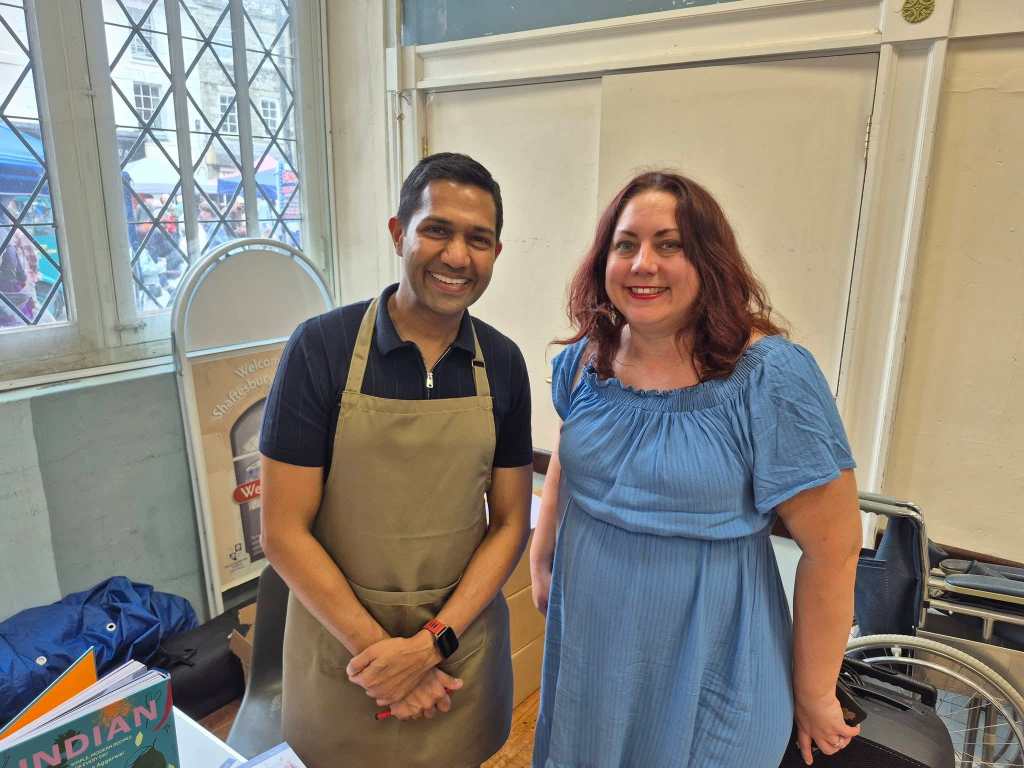
St. Luke’s Hospice is transforming its food and hospitality services, working with Anurag Aggarwal through AnuragFoodStory to help shape the model, concept and operating approach.”
There are moments in life when the carefully constructed plan suddenly stops making sense.
For Anurag Aggarwal, that moment came after the birth of his second son.
On paper, everything was going well. He had built a successful career in finance, qualified as an accountant, completed an MBA in Finance, moved from India to the UK and established a family life.
But beneath the success was a growing question: Is this really what I want to do for the rest of my life?
That question would eventually take him from spreadsheets and corporate life to the MasterChef kitchen — and now to the launch of an innovative new community bistro at St Luke’s Hospice in Thurrock.
SEASONS @ St Luke’s by AnuragFoodStory will open its doors on Monday 7 September. The 29-cover bistro has been created to bring food, hospitality and community together, serving patients, families, staff, visitors and the wider public while creating a sustainable income stream for the hospice.
For Anurag, however, the project represents far more than a new restaurant.
It is the latest chapter in a journey that began with a profound realisation that life was too short to simply follow a predetermined path.
“I reached a point where I started questioning more philosophically what the purpose of life was,” he explains.
For Anurag, that questioning emerged gradually as his career and family life became more established
“I had achieved all the possible milestones. I thought, ‘What now?’ I could simply create new milestones of the same nature, but that started to feel very transactional.”
Born and raised in India, Anurag moved to Britain with his wife in 2010 after being offered a position in his company’s London office.
His professional career was successful. He enjoyed the analytical side of finance and describes his former employer as an organisation that gave him excellent opportunities, culture and exposure.
But cooking had always been quietly present in the background.
He loved cookery programmes. He loved food. He loved creativity.
What he lacked was a reason to step away from the security of the corporate world.
Then came COVID.
For Anurag, the pandemic became a brutally clear reminder of how fragile life could be.
“Before COVID, I was scared to step outside my comfort zone,” he says. “Everything was working fine. I had a good job, family and financial stability. You start thinking about what people will say and whether you should take the risk.”
But the pandemic changed his perspective.
“Someone could sneeze on you and, at that time, you could potentially be dead within two weeks,” he says.
“That gave me a stark realisation. Life is too short to be scared. Life is too short to play it safe. Life is too short not to follow your passion.”
And so he began changing direction.
A leap of faith
Initially, Anurag considered opening a restaurant. But the hospitality market was still struggling after the pandemic.
Then he had another idea.
Why not apply for MasterChef?
He had watched the programme for years and, although he had no idea where the application would lead, he decided simply to try.
The application process itself became an unexpectedly profound experience.
“It was almost like writing your own biography,” he says. “It wasn’t only about food. It was about your personality, your inspiration and who you are.”
After thousands of applications, interviews, auditions and screening processes, Anurag received the call he had been hoping for.
He was going to be a contestant on MasterChef.
Ultimately, he would make it all the way to the final.
For someone who had spent years in the corporate world, stepping into a national television cooking competition was a remarkable change of direction.
But Anurag says the experience was about much more than the television show.
“I was so excited to see the set, meet the judges and represent Indian cuisine in the way I wanted to,” he says.
“But what I loved most about the show was the people.”
Contestants arrived from completely different backgrounds and walks of life, but they shared a common language: food.
“There was such a strong passion,” he says. “People had left their jobs or made huge changes in their lives to be there.”
The experience also created a community that continues beyond the programme, with former contestants helping one another with everything from food projects to writing books.
And among all the memories, one stands out.
Cooking for Nobel Prize winners
When Anurag reached the top five, the contestants were challenged at the Francis Crick Institute in London, cooking for some of Britain’s leading scientists, including Nobel Prize winners.
For someone who had only recently stepped away from a career in finance, the significance was not lost on him.
“It was seriously a goosebump moment,” he recalls.
“When we presented our menu and everything was finished, they started clapping for us.”
The moment carried an even deeper personal significance.
Anurag’s mother passed away from cancer in 2014, and he reflected on the research and discoveries that take place at institutions such as the Francis Crick Institute.
“I was thinking about the brilliant minds who are working to improve human life,” he says.
“It was such a privilege to be in that position.”
Food has always carried that sense of connection for Anurag.
His cooking is rooted in his Indian heritage, family memories and his mother’s influence, but he sees food as something much bigger than cuisine.
His favourite dish is moong dal halwa, a traditional North Indian lentil-based dessert.
His mother used to make it brilliantly.
It would eventually become part of the emotional inspiration behind his MasterChef journey.
Before he even knew he would reach the final, Anurag had already imagined the menu he would cook if he got there. He kept the idea to himself.
“I knew what I was going to cook if I reached the finale,” he says. “I never told anyone.”
The menu was called Jashan, meaning celebration in Hindi. Each course represented a different part of his life and identity. is starter, Rang meaning colour was inspired by Indian street food and explored different colours, flavours and textures.
“It wasn’t simply about putting food on a plate,” he explains.
“I wanted it to represent who I am.”
From MasterChef to the hospice
Today, those experiences are being channelled into something very different from a television kitchen.
Anurag has been working with St Luke’s Hospice to transform its catering operation and develop SEASONS @ St Luke’s.
The bistro is designed as a welcoming space where food can provide comfort, enjoyment, celebration and a sense of normality in a care environment. The hospice says the venture is also intended to create a sustainable income stream at a time when financial pressures on charitable healthcare organisations continue to grow.
The concept is deliberately inclusive.
It isn’t simply an Indian restaurant.
Instead, the menu will bring together different influences while reflecting Anurag’s philosophy of food: flavour, quality, sustainability and love.
“Food should have flavour, it should be good for people and the planet, and most importantly, it should be made with love,” he says.
Initially, SEASONS @ St Luke’s will open Monday to Friday, from 8am to 6pm, with plans to consider extending opening hours once the operation is established.
The bistro will also use seasonal ingredients and local suppliers, with the menu evolving to reflect the changing seasons.
That idea of seasons has a deeper meaning, too.
“Seasons has two meanings,” says Anurag.
“Obviously, there are the seasons in food — using what’s fresh and appropriate at different times of the year.
“But it also reflects the philosophy of the hospice. We celebrate the different seasons of life.”
A different view of hospice care
Working inside a hospice has changed Anurag’s perception of life and death.
Before becoming involved with St Luke’s, he admits that he imagined a hospice as a sad and gloomy environment.
What he found was something very different.
“It is actually the opposite,” he says.
“In a hospice, people have accepted that life has an ending, so the focus becomes: how do we make the most of the time we have?”
He describes it as a form of positive surrender.
That idea has become an important part of his own philosophy.
“In hospitals, people are often fighting against illness and trying to fix something,” he says.
“In a hospice, there is more acceptance. That is incredibly powerful.”
It has also reinforced his belief that happiness cannot simply be postponed until some future point.
“We have to claim our happiness,” he says. “We can’t keep putting it on other people or other circumstances.”
Fear, freedom and finding your place
Anurag’s thinking has developed beyond food.
He has become increasingly interested in philosophy and spirituality, and hopes eventually to write another book exploring some of those ideas.
One concept particularly resonates with him: the relationship between fear and freedom.
“I think they are opposites,” he says. “Either you have fear or you have freedom.”
He believes people can construct endless reasons for not taking a risk, but that genuine freedom only arrives when we stop allowing fear to dictate our decisions.
Another important shift in his thinking has been the way he sees himself in relation to the world around him.
“I started seeing myself as part of the universe rather than separate from it,” he explains.
“We are conditioned to think that we are on one side and everything else — other people, the economy, nature, our profession — is on the other side.
“Then we spend our lives battling against everything around us.
“But when you start seeing yourself as part of the whole, your perspective changes.”
It is a philosophy that seems to have shaped the way he now approaches his career.
Anurag doesn’t want to be defined by one job title.
He wants to work across food consultancy, hospitality, writing, public speaking and philosophy.
“I don’t think I’m someone who wants to do one job forever,” he laughs.
“I get bored quite quickly.”
Instead, he enjoys projects.
They may be challenging and overwhelming, he admits, but there is always a light at the end of the tunnel.
And then there is another project waiting.
More than a bistro
That approach explains why SEASONS @ St Luke’s feels like a natural next step.
Anurag is bringing together almost every part of his life: his Indian heritage, his mother’s influence, his MasterChef experience, his financial and commercial background, his love of food, his interest in sustainability and his growing desire to give something back.
St Luke’s describes the venture as more than simply a place to eat — it is intended to bring together food, care and connection while welcoming the wider community into the hospice environment.
For Anurag, that matters.
He believes food has the ability to break down barriers. Food Stories is all about this bringing together food, science and philosophy. It is a food systems advisory, hospitality transformation, writing, speaking and wider conversations about food and modern life.
It can bring families together. It can make difficult days feel slightly easier. It can create memories. It can provide comfort.
And perhaps most importantly, it can remind us that life is happening now.
“Sometimes you don’t need to know exactly where you’re going,” he says.
“You just have to do your bit.
“When you leave it and allow things to happen, things happen.”
It is a philosophy that has taken him a long way from the spreadsheets of his former corporate life.
From India to Britain.
From accountant to MasterChef finalist.
From television kitchens to a hospice.
And now, from a dream of working with food to creating a place where food can help sustain a charity and bring a community together.
For Anurag, it seems the journey was never really about becoming a chef.
It was about finding a more meaningful way to live.
And as SEASONS @ St Luke’s prepares to open its doors, he is hoping that the people who walk through them will feel exactly what he has come to believe about food:
that it should nourish the body, connect people, celebrate life — and, above all, be made with love.
SEASONS @ St Luke’s
SEASONS @ St Luke’s by AnuragFoodStory is a 29-cover bistro at St Luke’s Hospice in Thurrock. It opens on Monday 7 September 2026 and will initially operate Monday to Friday, 8am–6pm. The bistro welcomes patients, families, staff and visitors as well as members of the wider community, with the venture designed to contribute to the hospice’s long-term financial resilience.


Leave a comment