By Donna Richardson
For centuries, it has stood at the heart of Sherwood Forest, inspiring generations of dreamers, writers and visitors from around the world. Forever entwined with the legendary outlaw Robin Hood and his merry men who sheltered in her branches, the Major Oak has become one of Britain’s most recognisable trees and one of Nottinghamshire’s greatest natural symbols.
Indeed there are few places in England where myth and legend are so entwined. Located around 20 miles north of Nottingham, near the village of Edwinstowe in Nottinghamshire, Sherwood Forest National Nature Reserve is one of England’s most celebrated woodlands. Once part of a vast royal hunting forest that stretched across much of the county, it today attracts visitors from around the world who come to walk beneath ancient oaks, explore heathland and woodland trails, and immerse themselves in the enduring legend of Robin Hood. The Major Oak has long been the centrepiece of those visits, standing as both a natural wonder and a symbol of English folklore.
Now, with the ancient giant believed to have reached the end of its life, one man who has spent more than three decades bringing Robin Hood to life says that while the tree itself may eventually return to nature, the legend it inspired never will.
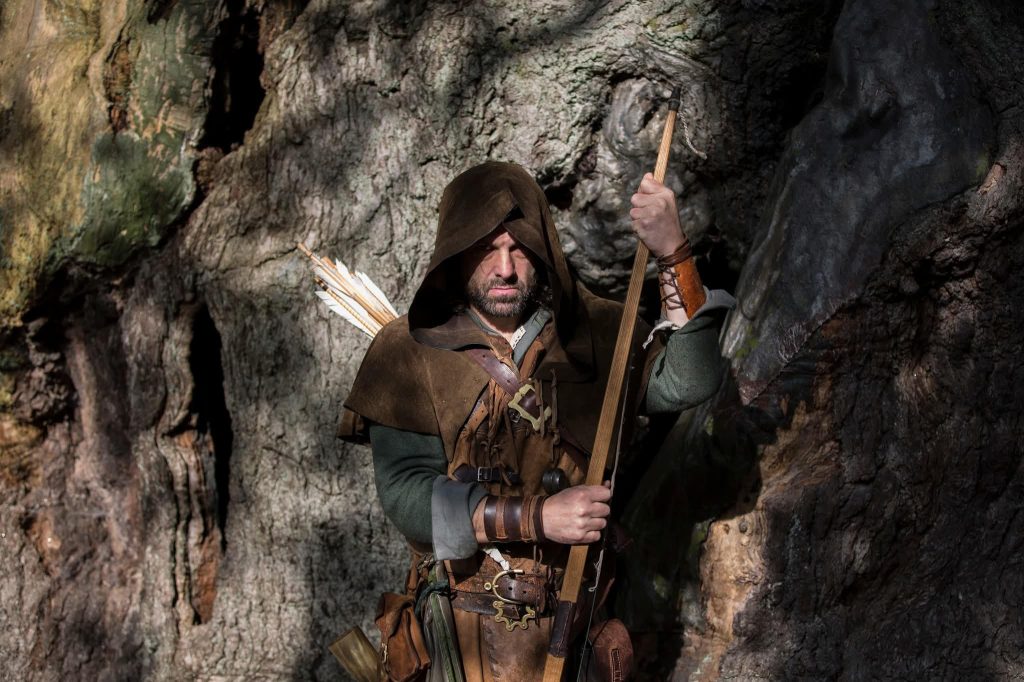
Ezekial Bone, the modern-day Robin Hood portrayed by local historian Ade Andrews, has devoted the past 33 years to preserving the stories of Sherwood Forest and the outlaw who made it famous. As a tour guide, actor and artist, he leads immersive theatrical experiences through Nottingham’s historic streets, medieval caves and landmarks, introducing visitors from around the world to the landscapes that gave birth to England’s most enduring folk hero. He helps travellers to understand the relationship between Nottingham and Sherwood Forest, and like many across Nottinghamshire, Bone has been saddened by the fate of the ancient oak.
“Whilst I normally spread good news stories about Nottingham and its famous son, it is with a heavy heart on this day that I bring sad news:
“The Major Oak, the world’s most famous tree and my ‘trysting tree’ for over 800 yrs, is officially declared dead. Industrialisation, human interaction (well-intentioned but detrimental), and climate change have all taken their toll on the thousand-year-old tree.
I, like many, have been watching with concern over the last few years, but now the truth that no one believed would happen in their lifetime has come to pass.
“But, have heart, good people. Remember that even in their death, these veteran oaks give life to the forest. Also, the sight of the natural monument degrading over decades will be remarkable in itself, and so, even in death, its story will continue into the future as a national treasure in the heart of the natural wonder that is Sherwood Forest. Give heart, the legend continues…”
The Sherwood Forest Trust confirmed: “The ancient giant, meeting place, folklore legend and keeper of stories has meant so many things to so many people. This is the news we’ve all been expecting as we’ve watched it coming to the end of its life. Many of us grew up under that tree, on family walks, school trips and adventures in the forest. It has been part of our lives for as long as we can remember.”
Reflecting on the tree’s significance, Bone said: “All pathways lead to the king of kings, and now the king is dead, but the story and the legend will live on.
“Even in death, the tree will continue giving life to the forest. Watching it slowly crumble away over the coming decades will be remarkable in itself.
“It is a valuable habitat supporting thousands of species. It remains part of the life of the forest.”
Estimated to be between 800 and 1,000 years old, the Major Oak has long occupied a special place in Britain’s imagination. Although historians continue to debate whether Robin Hood himself ever existed, the sprawling oak became inseparable from the story, serving as the legendary hiding place of Robin and his Merry Men and drawing hundreds of thousands of visitors to Sherwood Forest each year.
For Bone, however, the tree represents far more than folklore.
“Sherwood Forest is very close to my heart,” he said. “It is a national treasure that has served Britain for centuries. People want to believe in something bigger than themselves. They want to believe in a better world and in preserving the natural landscape for future generations. That is what Robin Hood and Sherwood Forest represent.”
Before becoming one of Nottingham’s best-known guides, Bone worked at the former Tales of Robin Hood attraction and later became involved in heritage and conservation projects connected with Sherwood Forest. Through decades of performance and storytelling, he gradually evolved into the character many now know him as.
“It becomes part of who you are,” he said. “You’re not just giving tours. You’re holding a story together.”
His mission has always been to bridge what he calls the “glass wall” between the city and the forest, helping visitors understand how Nottingham and Sherwood evolved together and why both remain central to the Robin Hood myth.
“I take my role as Robin Hood very seriously,” he said. “The aim is to educate people about the evolution of the legend and bring the forest to the city through my words so people understand and appreciate it more.”
He believes the appeal of Robin Hood reaches far beyond tourism.
“People want to believe,” he said. “They want to believe in justice. They want to believe that nature will survive into the future. That’s why the story matters.”
The Sheriff of Nottingham also paid tribute to the tree, saying, “Terrible news today. We are deeply saddened to report that the icon of Sherwood Forest and a beloved part of many, if not most, of our childhoods, the Major Oak, has died.
“Conservationists worked to protect the tree, which attracted millions of visitors over its life, but in recent years, the natural giant was in decline. It was plain to see.”
The Royal Society for the Protection of Birds (RSPB), which manages the Sherwood Forest National Nature Reserve, said the tree’s first spring without leaves had led scientific experts to conclude that the Major Oak had died.
While the precise cause remains uncertain, the conservation charity said a combination of factors, including decades of well-intentioned structural intervention and intense human activity around the tree, were believed to have contributed to its decline.
As conservationists prepare to allow the ancient oak to age naturally, the giant will continue supporting wildlife long after its days as a living symbol have passed. Even in decay, veteran oaks remain vital habitats for thousands of species.
For Bone, that cycle of life and renewal mirrors the story he has spent much of his life telling.
Trees die, forests change, generations pass. The Oak has stood for almost 10 centuries. But legends endure.
And as long as people walk the paths of Sherwood and storytellers are willing to don the green hood, Robin Hood will continue to live — not merely in books and films, but in the landscape, the imagination and the people of Nottingham itself.
“The Major Oak may die,” said Bone, “but the legend never will.”
He believes visitors will continue to come, carrying memories and images of the great tree, while its passing serves as a reminder of humanity’s duty to protect the natural world.
“There is a message being told to people,” he said. “Pay attention. Wise up. Stand up and look after this world we live in.”
After centuries of attempts to preserve and support the tree, he believes the best course now is to allow nature to take its course.
“Nottingham is the unsung hero of England,” he said. “And the underdog is rising.”
Ezekial Bone runs regular tours in Nottingham on the first and third Saturdays of each month. Beginning at 2pm at The Cross Keys and ending at Ye Olde Trip to Jerusalem, the walks explore the city’s history and its connection with Robin Hood. This month, he is also launching a medieval banquet experience at The Castle Inn, complete with minstrels and appearances as Robin Hood himself.


Leave a comment